CPAP in Summer time: Find out how to Modify Humidity, Repair Rainout, and Sleep Higher
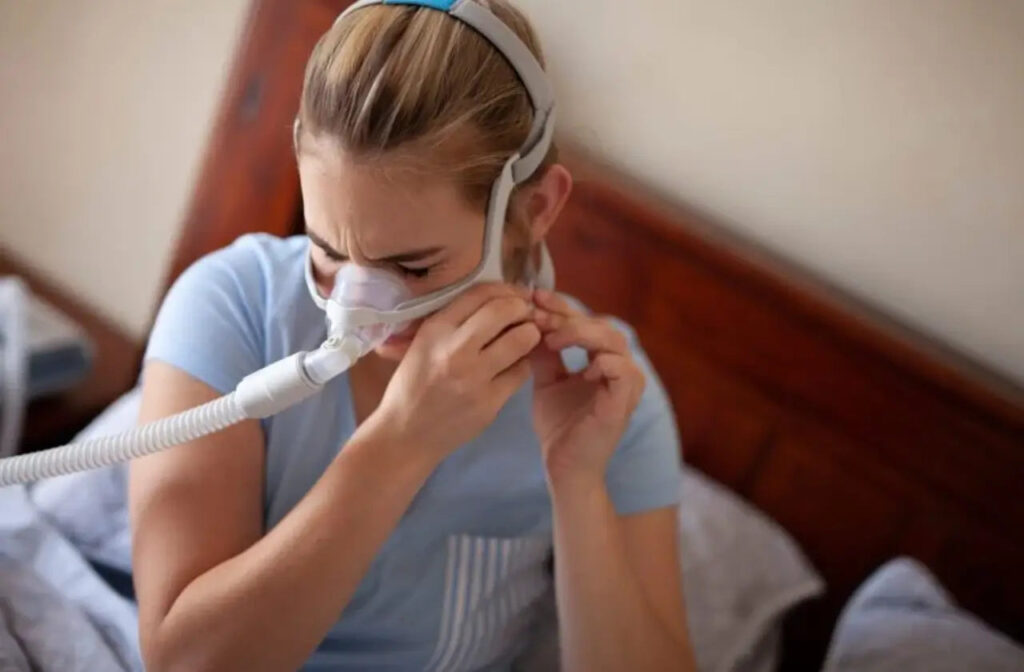
You made it by way of the winter. Your CPAP compliance is stable. Then summer season arrives, the air will get thick, and all of a sudden you might be waking up with water dripping in your face, a stuffy nostril, and a masks that looks like a sauna. Your settings haven’t modified. Your tools is okay. So what offers?
This is without doubt one of the commonest seasonal complaints we hear from CPAP customers, and it makes full sense when you perceive what warmth and humidity truly do to your remedy. Based on analysis revealed in Respiration (Nilius et al., 2018), ambient temperature considerably impacts masks humidity throughout CPAP remedy. The settings that labored completely in February could cause actual issues by July.
As Lilly, our licensed respiratory therapist, places it: “When you perceive what summer season does to your CPAP settings, every thing will begin to click on — and you should have the instruments to repair it tonight.”
On this information, you’re going to get precise humidity settings for summer season, the right way to repair CPAP rainout earlier than it disrupts your sleep, and eight sensible tricks to keep comfy and compliant when it’s scorching.
Why Summer time Adjustments Every thing for CPAP Customers
Right here is the quick model of the physics: heat air holds extra moisture than chilly air. When summer season arrives, and ambient humidity rises, your CPAP pulls that already-humid air into the machine, provides warmth from the humidifier, and delivers it by way of the tubing to your masks.
The issue is what occurs contained in the tube. That heat, humid air cools because it travels by way of the hose — particularly in case your room is air-conditioned or the tube runs throughout a cool floor — and the moisture condenses. The result’s rainout: water droplets forming contained in the tubing and dripping into your masks.
A 2018 examine by Nilius et al. (PMC5935083), cited 21 instances in scientific literature, confirmed: “ambient temperature considerably impacts masks humidity throughout CPAP remedy.” The identical humidifier setting that stored your airway comfy in winter is now actively working towards you in summer season.
The excellent news: it is a settings downside, not an tools downside. For a full overview of how CPAP humidifiers work year-round, see our full CPAP humidifier information.
What Is CPAP Rainout and Why Does It Get Worse in Summer time
CPAP rainout is condensation that kinds inside your tubing and drips into your masks, leaving you with a moist face mid-sleep.
It occurs when heat, humidified air out of your machine travels by way of the tube and cools earlier than reaching your masks. The moisture doesn’t disappear — it turns into liquid and swimming pools contained in the hose or collects on the masks opening.
Rainout isn’t harmful. It won’t interrupt your remedy or hurt your airway. However it’s disruptive — waking up with water in your face is strictly the sort of friction that erodes CPAP compliance over time. Based on Pepin et al. (1995, PMID 7555153), tools discomfort and unwanted effects like extreme moisture are among the many main causes CPAP customers abandon remedy altogether.
In summer season, rainout turns into extra frequent as a result of ambient humidity is already excessive. Your humidifier doesn’t must work practically as exhausting — however whether it is nonetheless set at your winter degree, it’s including moisture that the nice and cozy air can’t maintain as soon as temperatures shift contained in the tube. Is rainout harmful? No — however it’s a clear sign your settings want a seasonal adjustment.
For the total rainout troubleshooting protocol, see our full information to stopping CPAP rainout.

Indicators Your Humidity Is Too Excessive
If any of those sound acquainted, your humidifier is probably going set too excessive for summer season circumstances:
● Stuffy or runny nostril within the morning — extra moisture irritates nasal passages, inflicting congestion that was not there while you went to mattress
● Gurgling or effervescent sound from the tube — water is pooling contained in the hose and air is pushing by way of it
● Water droplets inside your masks or tube — basic rainout; seen condensation on the within of your tools
● Waking up with a moist face — the obvious signal, and probably the most disruptive to sleep
● Elevated masks leaks — moisture softens the cushion seal over time, permitting air to flee across the edges
● White mineral residue within the humidifier tub — a sign to modify to distilled water; warmth accelerates mineral buildup
These signs virtually at all times level to the identical repair: decrease the humidity setting. In summer season, even one or two notches down could make an instantaneous distinction. The subsequent part tells you precisely the place to land.
Your CPAP Humidity Settings for Summer time — Precise Suggestions
For many CPAP customers in summer season, reducing your humidity out of your winter setting (usually 5-6 on most machines’ 1-8 scale) to a summer season setting (usually 2-4) reduces rainout with out compromising consolation.
The AASM Scientific Tips for CPAP titration (Kushida et al., 2006, PMID 17557487) set up humidification as a key consolation think about long-term remedy adherence. Seasonal adjustment — moderately than a set year-round setting — is the method supported by each scientific proof and respiratory therapist expertise.
Humidity Settings Reference Desk
|
Setting |
Winter (typical) |
Summer time (typical) |
Summer time (humid local weather) |
Notes |
|
Humidifier warmth degree (1-8) |
5-6 |
2-4 |
1-2 or OFF |
Decrease in summer season to scale back rainout |
|
Tube temperature (C) |
27-30 C |
22-25 C |
20-22 C |
ClimateLine Auto adjusts mechanically |
|
Local weather Management (ResMed) |
Local weather Auto (really useful) |
Local weather Auto |
Local weather Auto or Guide-Low |
Accessible on AirSense 10 and 11 |
|
Humidifier water sort |
Distilled solely |
Distilled solely |
Distilled solely — important |
By no means faucet water; warmth accelerates mineral buildup |
|
Filter change frequency |
Month-to-month (disposable) |
Each 2-3 weeks |
Each 2 weeks |
Larger pollen and mildew load in summer season |
|
Masks cleansing frequency |
3x per week |
Every day |
Every day |
Warmth accelerates micro organism and mildew development |
Machine-specific steering: ResMed AirSense 10 and AirSense 11 customers ought to allow Local weather Management Auto within the humidifier settings menu. This mode makes use of built-in sensors to regulate warmth degree and tube temperature in actual time — mechanically compensating for top summer season humidity. In case your machine helps a heated tube such because the ClimateLineAir, pairing it with Local weather Auto is the simplest single change you may make towards summer season rainout.
8 Ideas for Higher CPAP Consolation in Summer time
These are the eight changes that make the largest distinction, so as of affect:
1. Decrease your humidifier setting
Drop out of your winter degree (usually 5-6) to a summer season degree (2-4). That is the one highest-impact repair for rainout and morning stuffiness. In case you are in a really humid local weather, attempt as little as 1 or flip it off quickly. Monitor for dry mouth or sore throat — these indicators you’ve gotten gone too low.
2. Allow Local weather Auto mode — not handbook excessive
In case your machine helps it (ResMed AirSense 10/11), allow Local weather Management Auto as a substitute of a handbook setting. This enables the machine to regulate humidification and tube temperature dynamically primarily based on real-time ambient circumstances. Forcing a excessive handbook setting in summer season is without doubt one of the commonest causes of persistent rainout.
3. Place your CPAP decrease than your mattress degree
Preserve the machine on the ground or decrease than your mattress floor. Condensed water contained in the tube flows towards the bottom level. When your CPAP sits at mattress degree, that water flows towards your masks. When it’s decrease, gravity sends it again towards the machine. This repair prices nothing and works instantly.
4. Use a CPAP masks liner to handle sweat
In summer season, sweat breaks down the masks seal sooner than some other issue. CPAP masks liners are moisture-wicking inserts that sit between the cushion and your pores and skin, absorbing perspiration earlier than it reaches the silicone seal. In addition they cut back irritation and redness from warmth friction. See our information to the greatest CPAP masks liners for summer season for particular suggestions.
5. Clear your tools every day — not weekly
Heat temperatures and humidity create ideally suited circumstances for bacterial and mildew development inside your humidifier tub, masks cushion, and tubing. In winter, cleansing 3x per week could also be adequate. In summer season, every day cleansing is the usual. Wipe your masks cushion each morning, rinse the humidifier tub every day, and deep-clean every thing weekly.
6. Change your filter each 2-3 weeks
Summer time brings larger pollen counts, mildew spores, and allergens — all of which clog CPAP filters sooner than regular. A clogged filter reduces airflow effectivity and forces your machine to work more durable. Exchange your CPAP filter each 2-3 weeks in summer season moderately than the usual month-to-month schedule.
7. Use solely distilled water in your humidifier tub
This issues year-round, however it issues extra in summer season. Warmth accelerates mineral buildup from faucet water contained in the humidifier chamber. Distilled water in your CPAP is the one water sort really useful — faucet water, filtered water, and bottled water all depart mineral residue.
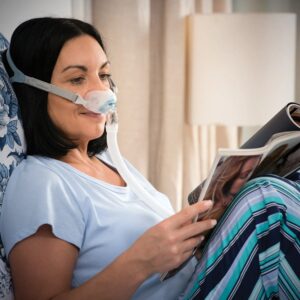
8. Think about switching to a nasal pillow masks in case your full-face masks feels too scorching
A full-face masks covers a big space of your face. In summer season warmth, that contact can really feel suffocating — which ends up in masks elimination mid-sleep. Nasal pillow masks have minimal facial contact, sitting on the nostril openings moderately than protecting the nostril and mouth. If warmth is inflicting you to take away your masks at 3 a.m., a change to a nasal pillow design will be the most important consolation enchancment of the season.
What to Do When Rainout Persists Even With a Heated Hose
You bought a heated hose. You lowered your humidity. You’re nonetheless waking up with water in your face. What is occurring?
Right here is the half that catches many CPAP customers off guard: in summer season, the issue usually isn’t your tube temperature — it’s the ambient humidity of your room. When the relative humidity in your bed room exceeds 60-70%, there’s extra moisture within the air to start with. A heated hose raises the temperature contained in the tube to forestall condensation — however when the air coming into your machine is already saturated, the hose can solely accomplish that a lot.
4 particular fixes for persistent summer season rainout:
● Decrease your humidifier output additional. Even in the event you already dropped to degree 3, attempt 2 or 1. In case your room is of course humid, you want much less humidification from the machine.
● Allow Local weather Auto mode (ResMed) or SmartFlex (Philips). Guide settings lock you into a set output. Auto modes reply to real-time ambient circumstances — precisely what is required when summer season humidity fluctuates.
● Use a tube insulating wrap. A hose cowl reduces the temperature differential between the air inside and outdoors the tube — the direct explanation for condensation. Cheap and instantly efficient.
● Flip the humidifier off solely as a check. In very humid climates (coastal areas, tropical areas), some customers discover higher outcomes with none humidification. In case your ambient humidity is constantly above 70%, attempt it for one night time and monitor for dryness.
If rainout continues after all the above, see our full information to stopping CPAP rainout for superior troubleshooting steps.
Summer time CPAP Cleansing Schedule
Cleansing your CPAP extra usually in summer season can really feel like a burden, however it’s the single smartest thing you are able to do to guard your remedy.
Warmth and humidity speed up the expansion of micro organism, mildew, and yeast inside your humidifier chamber, masks cushion, and tubing. A examine by Worsnop et al. (2010, PMID 20630044) confirms that correct humidifier upkeep immediately impacts remedy effectiveness and affected person security. Right here is the summer season schedule:
Every day:
● Rinse masks cushion and body with heat water, or wipe with CPAP-safe cleansing wipes
● Empty and rinse the humidifier tub (don’t depart standing water within the warmth)
● Permit all tools to air-dry away from direct daylight
Each 3 days:
● Clear the tubing — run heat soapy water by way of the hose, rinse totally, grasp to dry
Weekly:
● Deep-clean humidifier tub with gentle cleaning soap or a CPAP-safe cleansing gadget
● Wash headgear and masks cushion in heat, fragrance-free soapy water
● Examine tubing for cracks or discoloration
Month-to-month (or each 2-3 weeks in summer season):
● Exchange disposable CPAP filter
● Examine all parts for put on; substitute cushion if softened or leaking
For the total year-round cleansing protocol and product suggestions, see our full CPAP cleansing information and browse our CPAP cleansing provides.
Ceaselessly Requested Questions
Prepared for a Comfy Summer time of CPAP Remedy
Summer time doesn’t need to imply poor sleep or skipped remedy nights. Every thing lined on this information — the humidity adjustment, the rainout fixes, the cleansing schedule — takes lower than 5 minutes to implement. And the distinction is often fast.
Our respiratory remedy staff is right here year-round, not simply in summer season. In case your CPAP continues to be providing you with bother after adjusting your settings, attain out, and we’ll stroll you thru it.
References
- Nilius G, Domanski U, Schroeder M, et al. “Masks humidity throughout CPAP: affect of ambient temperature and humidification.” Respiration, 2018. PMC5935083.
- Kushida CA, Chediak A, Berry RB, et al. “Scientific Tips for the Guide Titration of Optimistic Airway Strain in Sufferers with Obstructive Sleep Apnea.” Journal of Scientific Sleep Medication, 2006. PMID 17557487
- Worsnop CJ, Miseski S, Rochford PD. “The routine use of humidification with nasal steady optimistic airway strain.” Respirology, 2010. PMID 20630044
- Berry RB, Chediak A, Brown LK, et al. “Finest Scientific Practices for the Sleep Middle Adjustment of Noninvasive Optimistic Strain Air flow.” Journal of Scientific Sleep Medication, 2010. PMID 20957836.
- Pepin JL, Leger P, Veale D, et al. “Unintended effects of nasal steady optimistic airway strain in sleep apnea syndrome: Examine of 193 sufferers.” Chest, 1995. PMID 7555153.