Why Your Inside Clock Is Off and Methods to Repair It
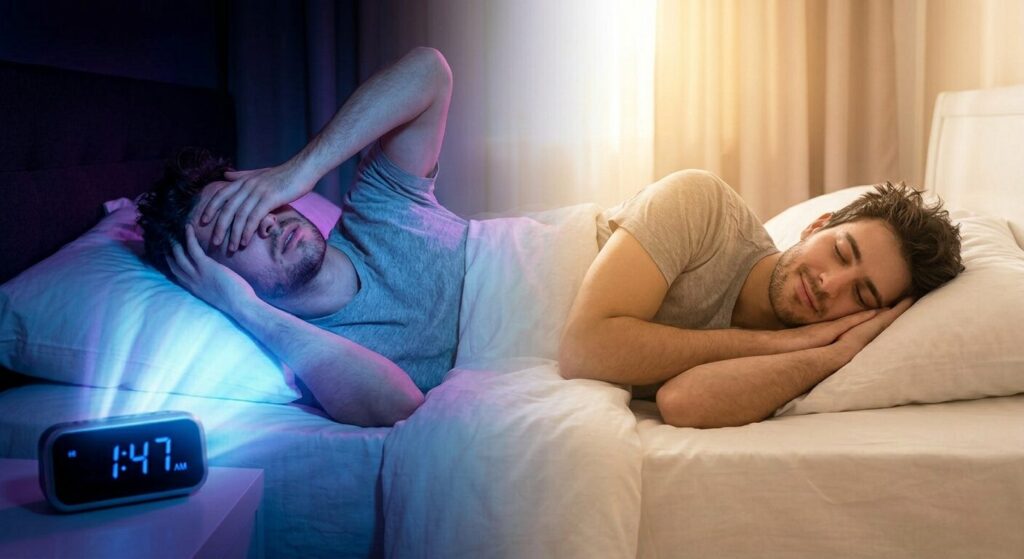
Right here’s the paradox that defines circadian rhythm insomnia: you’re not truly unable to sleep. Given the best circumstances — a Saturday morning with no alarm, a vacation with no schedule — sleep comes naturally. Typically fantastically. The issue is that sleep arrives on a schedule that doesn’t match the one your life calls for.
You possibly can’t go to sleep till 2 or 3 a.m. Otherwise you crash at 8 p.m. and wake at 3 a.m. with no risk of falling again. Or your sleep window shifts unpredictably from week to week, as in case your physique by no means discovered what time zone it lives in.
This isn’t garden-variety insomnia. It’s a clock downside — a mismatch between your inner organic timing and the timing your life requires. And till somebody names it for what it’s, most individuals spend years biking by means of sleep hygiene recommendation, melatonin dietary supplements, and anxiousness remedy that by no means deal with the precise concern.
What Is Circadian Rhythm Insomnia?
Circadian rhythm insomnia — clinically referred to as circadian rhythm sleep-wake dysfunction — is a class of sleep issues during which the physique’s inner clock runs on a timing cycle that conflicts with desired or required sleep hours. The individual can sleep. They only can’t sleep when they should.
That is basically completely different from major insomnia, the place the flexibility to sleep is impaired no matter timing. With circadian rhythm insomnia, the sleep structure itself is usually regular. Deep sleep and REM are each intact. The issue is solely temporal: all the sleep-wake cycle is shifted, compressed, or unstable.
For a deep dive on how the circadian clock works, what the grasp and peripheral clocks do, and the two-process mannequin of sleep regulation, see our pillar article: Circadian Rhythm Disruption. This text focuses particularly on the medical sorts of circadian insomnia, the hidden causes that make it persist, and the therapy approaches that really work.
The Sorts of Circadian Rhythm Insomnia

There isn’t one sort of circadian rhythm insomnia. There are a number of distinct patterns, every with completely different traits and completely different therapy implications.
Delayed Sleep-Wake Part Dysfunction (DSWPD)
The most typical sort, particularly in adolescents and younger adults. The interior clock runs late — melatonin doesn’t launch till midnight, 1 a.m., or later. You possibly can’t go to sleep at a standard time, however as soon as sleep comes, high quality is usually nice. The hallmark: should you might sleep from 2 a.m. to 10 a.m. daily, you’d really feel nice. The issue is that life begins at 7 or 8 a.m.
Superior Sleep-Wake Part Dysfunction (ASWPD)
The other sample. The clock runs early — overwhelming sleepiness by 7 or 8 p.m. and spontaneous waking at 3 or 4 a.m. with no capability to return to sleep. Extra widespread in older adults. Folks with ASWPD typically interpret the early waking as insomnia or anxiousness, however their sleep structure is regular — simply shifted ahead.
Non-24-Hour Sleep-Wake Dysfunction
The interior clock runs on a cycle longer than 24 hours and fails to entrain. Sleep onset drifts progressively later every day. Commonest in completely blind people (missing gentle enter to the SCN), however can happen in sighted folks with weakened circadian entrainment.
Irregular Sleep-Wake Rhythm Dysfunction
No clear single sleep interval. Sleep is fragmented into a number of brief bouts throughout the 24-hour day. Complete sleep could also be ample, however the sample is chaotic. Typically related to neurodegenerative circumstances however can happen with power circadian disruption from different causes.
If you need to see how we’d give you the option that can assist you with this deeper, schedule a free seek the advice of right here.
How Circadian Rhythm Insomnia Feels
The lived expertise of circadian insomnia is distinct from different types of insomnia, and recognising the sample is step one towards the best resolution.
What Separates It From “Common” Insomnia
-
You possibly can sleep nicely — simply not on the proper time. On free days with no alarm, sleep comes naturally and feels restorative.
-
The issue is constant and directional. You’re all the time late (DSWPD) or all the time early (ASWPD), not randomly good and dangerous.
-
Sleep hygiene interventions don’t have any impact. Darkening the room and avoiding screens assist on the margins, however they don’t shift your precise sleep window.
-
Melatonin helps modestly — or in no way — as a result of the timing is improper. Taking melatonin at 10 p.m. when your physique doesn’t anticipate it till 2 a.m. is like taking it in a special time zone.
The Downstream Influence
-
Power sleep deprivation on work days with partial weekend restoration (“social jet lag”)
-
Morning grogginess so extreme it mimics a hangover
-
Issue concentrating, particularly in morning hours
-
Temper instability — anxiousness and melancholy are considerably extra widespread with circadian sleep issues
-
Metabolic disruption — weight acquire, blood sugar instability, elevated urge for food
Why Your Clock Will get Caught — and Why Commonplace Recommendation Doesn’t Repair It
Most circadian insomnia recommendation focuses on gentle publicity and sleep timing. These are essential — they’re lined in our companion article on circadian rhythm disruption. However when folks observe the light-and-timing protocol faithfully and the clock nonetheless gained’t shift, one thing deeper is normally at play.

Genetic Chronotype
Some persons are genetically wired to run late or early. Variations in clock genes like PER2, PER3, and CRY1 affect the intrinsic interval size. A CRY1 mutation recognized in 2017 lengthens the circadian interval, predisposing carriers to delayed sleep section. In case your clock is genetically longer than 24 hours, it wants stronger day by day entrainment indicators — and any disruption causes quicker drift.
Weakened Zeitgeber Enter
Zeitgebers are environmental cues that reset the clock day by day. Mild is essentially the most highly effective, however meal timing, exercise, and temperature additionally contribute. Trendy life systematically weakens these inputs: dim indoor gentle through the day, brilliant synthetic gentle at evening, irregular consuming, inconsistent schedules. The clock doesn’t drift as a result of it’s damaged. It drifts as a result of the indicators holding it anchored have turn into too weak.
Intestine Well being and Melatonin Manufacturing
The intestine produces 90–95 p.c of the physique’s serotonin, and serotonin is the precursor to melatonin. Intestine infections — H. pylori, parasites, dysbiosis — that impair serotonin manufacturing successfully scale back the power of the clock’s major sleep hormone. The clock could also be working on the proper time, however its melatonin output is simply too weak to provoke sleep.
For this reason somebody can do every little thing proper with gentle and timing and nonetheless lie awake. The clock is about, however it’s broadcasting on a sign that’s been turned right down to a whisper.
Cortisol and Nervous System Dysregulation
Power stress flattens the cortisol curve, eradicating a key timing anchor. And not using a sharp morning peak and deep night trough, the clock loses the distinction between “wake mode” and “sleep mode” — leaving you by no means absolutely awake and by no means absolutely able to sleep.
Nutrient Deficiencies
Magnesium, zinc, B6, and iron all play direct roles in sleep physiology — and all are depleted by the intestine infections and power stress patterns that generally accompany circadian rhythm insomnia. With out ample uncooked supplies, the physique merely can’t produce sufficient of the neurotransmitters and hormones the circadian system is dependent upon, no matter how nicely the clock itself is calibrated.
What the Analysis Reveals
Genetics and DSWPD: A 2017 Cell research recognized a CRY1 mutation (current in ~0.6% of the inhabitants) that lengthens the circadian interval, predisposing carriers to delayed sleep section — the primary main genetic hyperlink to a particular circadian sleep problem.
Mild remedy: A meta-analysis in Sleep Medication Critiques confirmed that timed brilliant gentle publicity shifts circadian section by 1–2 hours per week in each DSWPD and ASWPD when administered constantly.
Chronotherapy: Analysis in Sleep has proven that progressive delay chronotherapy can reset circadian section in extreme DSWPD, although the protocol is demanding and relapse charges are excessive with out upkeep.
Psychological well being impression: A UK Biobank research in The Lancet Psychiatry discovered circadian disruption considerably related to melancholy, bipolar dysfunction, and decreased wellbeing — impartial of complete sleep period. Sleep timing, not simply quantity, has measurable psychological well being penalties.
Why Circadian Insomnia Persists
When the fundamental recommendation doesn’t work, the problem is normally certainly one of these deeper drivers:
-
Intestine infections (H. pylori, parasites) lowering serotonin/melatonin manufacturing
-
Nutrient deficiencies (magnesium, zinc, B6, iron) ravenous the sleep hormone pathway
-
HPA axis dysregulation flattening the cortisol curve
-
Genetic chronotype creating an inherently longer or shorter interval requiring stronger entrainment
-
Power irritation disrupting hypothalamic sleep-regulation circuits
-
Entrenched life-style components: late-night consuming, irregular meals, inadequate daytime gentle
The organic points require investigation. The approach to life components require change. Most individuals with persistent circadian insomnia want each.
Methods to Repair Circadian Rhythm Insomnia
Therapy works in layers. Begin with the behavioural foundations, then examine the organic ones if the clock gained’t reply.
Layer 1: Strategic Mild Publicity
-
For DSWPD (late sleeper): brilliant gentle inside 15–half-hour of waking. 10,000-lux gentle remedy field or direct out of doors daylight for 15–20 minutes. Keep away from brilliant gentle after 8 p.m.
-
For ASWPD (early waker): brilliant gentle within the late afternoon/early night to delay the clock. Keep away from brilliant morning gentle for the primary 1–2 hours after waking.
-
For Non-24: most attainable morning gentle publicity mixed with low-dose melatonin on the identical time every night to anchor the cycle
Layer 2: Exactly Timed Melatonin
Melatonin works as a chronobiotic (clock-shifter), not only a sedative. Timing issues excess of dose.
-
For DSWPD: low-dose melatonin (0.3–0.5 mg) taken 4–6 hours earlier than present pure sleep onset to advance the clock. Taking it at bedtime is simply too late to shift timing.
-
For ASWPD: brilliant night gentle is the first intervention; melatonin upon waking might help in some instances
Increased doses (3–10 mg) act as sedatives however don’t shift timing as successfully. The clock-shifting impact is strongest at sub-physiological doses.
Layer 3: Consistency and Meal Timing
-
Fastened wake time daily — that is the one most essential behavioural anchor
-
First meal inside 1–2 hours of waking; final meal at the least 3 hours earlier than goal bedtime
-
Common bodily exercise, ideally in daylight, which reinforces circadian entrainment by means of each gentle and activity-based zeitgebers
Layer 4: Examine the Biology
If layers 1–3 haven’t resolved the issue inside 2–3 weeks, the clock’s inputs are possible compromised.
-
Take a look at for H. pylori and intestine parasites — each impair serotonin/melatonin manufacturing
-
Take a look at iron, ferritin, B12, magnesium, zinc, and vitamin D — deficiencies impair the hormonal cascade the clock is dependent upon
-
Consider HPA axis perform — a flat cortisol curve means the clock has misplaced a key timing sign
-
Assess the intestine microbiome — microbiome range independently predicts sleep high quality
This text is academic and never medical recommendation. Circadian rhythm sleep issues might be complicated. Work with a certified skilled for analysis and therapy. If you need to see how we’d give you the option that can assist you with this deeper, schedule a free seek the advice of right here.
When to Search Skilled Assist
Think about skilled assist if:
-
You’ve carried out constant gentle publicity and sleep timing for two–3 weeks with out significant enchancment
-
Your sleep window is shifted by greater than 3 hours out of your desired schedule
-
Circadian insomnia coexists with digestive signs, power fatigue, or nutrient deficiencies
-
You think a intestine an infection could also be impairing your physique’s melatonin manufacturing
-
The issue is considerably affecting work, relationships, temper, or well being
-
You’ve been prescribed sleeping remedy that helps you go to sleep however doesn’t shift whenever you naturally really feel sleepy
That final level is important. Sleeping tablets can drive sleep onset, however they don’t transfer the circadian clock. In the event you’re counting on remedy to sleep at a standard time, the underlying timing downside stays unresolved.
Often Requested Questions
What’s circadian rhythm insomnia?
Circadian rhythm insomnia is a sleep problem the place the physique’s inner clock runs on a timing cycle that doesn’t match the individual’s desired or required sleep schedule. The individual can sleep usually — the issue is that sleep arrives on the improper time. The most typical varieties are delayed sleep-wake section dysfunction (sleep comes too late) and superior sleep-wake section dysfunction (sleep comes too early).
How do you deal with circadian rhythm insomnia?
Therapy entails strategically timed brilliant gentle publicity, low-dose melatonin used as a clock-shifter (not a sedative), constant wake occasions and meal timing, and investigation of underlying components like intestine infections or nutrient deficiencies which may be weakening the clock’s capability to reset. Sleeping tablets can drive sleep onset however don’t deal with the underlying timing downside.
Can intestine well being trigger circadian rhythm insomnia?
Sure. The intestine produces 90–95 p.c of the physique’s serotonin, which is the precursor to melatonin. Intestine infections like H. pylori and parasites can scale back serotonin manufacturing, successfully weakening the circadian clock’s melatonin sign. This may trigger the clock to float or forestall it from responding to gentle and timing interventions.
Is delayed sleep section the identical as being an evening owl?
They overlap, however they’re not an identical. Being an evening owl describes a chronotype desire — a pure tendency to be extra alert later within the day. Delayed sleep-wake section dysfunction is a medical situation the place the clock is shifted thus far that it causes important impairment: power sleep deprivation, incapability to perform throughout required morning hours, and detrimental results on well being, temper, and efficiency.
Why doesn’t melatonin work for my circadian insomnia?
Often due to timing or dose. Melatonin is simplest as a circadian shifter at low doses (0.3–0.5 mg) taken 4–6 hours earlier than your present pure sleep onset. Increased doses act extra as sedatives and fewer as clock-shifters. If the timing is improper or the dose is simply too excessive, melatonin could induce drowsiness with out truly transferring the clock. If correctly timed melatonin nonetheless doesn’t work, impaired serotonin-to-melatonin conversion from a intestine concern could also be the issue.
When to Work With a Sleep Guide
Circadian rhythm insomnia is without doubt one of the most misunderstood sleep issues. Folks spend years considering they’ve “common” insomnia, taking drugs that masks the timing downside with out fixing it.
Riley Jarvis at The Sleep Guide works with purchasers to differentiate circadian timing points from different causes, establish the organic components stopping the clock from resetting — intestine infections, nutrient deficiencies, HPA axis dysfunction — and construct a personalised protocol that addresses each the clock and its inputs.
In case your sleep timing has been off for months or years and nothing has mounted it, guide a session at TheSleepConsultant.com.