What’s the Distinction? – Sleeplay
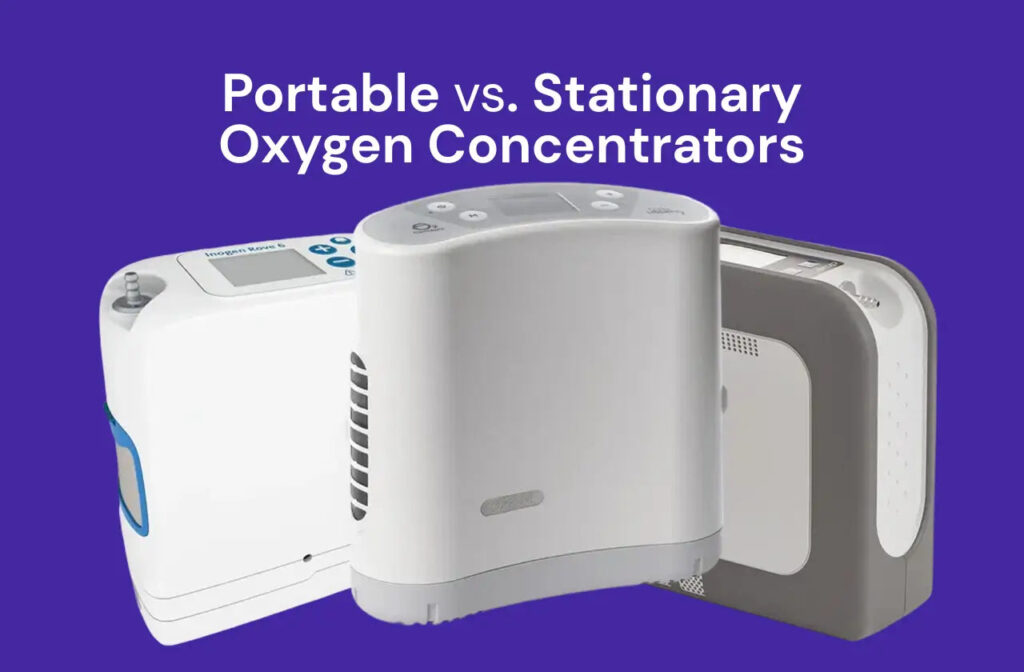
Selecting the best oxygen setup is just not about selecting a winner; it’s about matching the gadget to your life-style and medical wants. A transportable oxygen concentrator provides you the liberty to maneuver outdoors, whereas a stationary oxygen concentrator acts as your dependable house base with larger move capabilities. Your particular prescription and each day routine will determine which software suits your state of affairs finest.
Fast comparability: Moveable vs. Stationary oxygen concentrators
|
Moveable Oxygen Concentrator |
Stationary Oxygen Concentrator |
|
|
The place you’ll use it most |
You allow the home usually for errands, walks, or journey, so it’s simpler to maintain oxygen with you past one room. |
You primarily want oxygen at house, so a gradual setup can keep plugged in and prepared. |
|
Movement fashion you’re prescribed |
Many transportable items ship oxygen as a pulse dose (on inhale). That may work properly for a lot of routines, relying in your prescription. |
Residence items generally assist steady move and better move wants, which helps when your prescription requires constant supply. |
|
Energy & runtime |
Battery time issues, so that you’ll plan round charging and (generally) spare batteries. |
Runs on AC energy at house, so there’s much less planning round batteries. |
|
Weight, dimension, and day-to-day dealing with |
You’ll carry it (or roll it), so weight and form have an effect on how usually you truly take it out. |
It stays in place, so dimension issues lower than stability and quick access in your house. |
|
“Greatest match” final result |
Greatest when independence outdoors the house is the precedence. |
Greatest when house protection and a steadier, higher-flow setup is the precedence. |
In case your oxygen wants occur largely outdoors the home, a conveyable gadget normally makes each day life simpler. But when your wants are largely at house, a stationary gadget is usually the only base setup. Both approach, your prescription decides what is acceptable.
What Oxygen Concentrators Do and Why the Sort Issues
An oxygen concentrator is basically an air purifying machine to your lungs. It pulls within the common air from the room, filters out the nitrogen, and delivers concentrated oxygen on to you thru a cannula or masks. This course of ensures you get the supplemental oxygen your physique wants with out counting on heavy tanks that want refilling. The NIH Bookshelf notes that this expertise is customary for long-term remedy. Nonetheless, the particular kind you select impacts far more than simply the machine’s dimension; it dictates the way you obtain that oxygen, the place you possibly can journey, and the way a lot planning your day requires.
How oxygen concentrators ship oxygen
That is the half the place many new customers get confused. There are two distinct methods these machines ship air to you:
-
Steady move: This methodology gives a gradual, uninterrupted stream of oxygen, much like water flowing from a fountain. It’s the usual for many stationary house setups as a result of it ensures supply no matter your respiration sample.
-
Pulse dose: This methodology delivers oxygen briefly bursts solely whenever you inhale. It’s the usual for many transportable items as a result of it saves vitality and extends battery life.
One fashion is just not inherently higher than the opposite. What works is dependent upon your prescription and the way you breathe and transfer through the day. Actual-life components like sleeping, exercising, or congestion can change how efficient a pulse dose feels in comparison with a gradual stream. You possibly can learn extra about how this works on this POC explainer from Nationwide Jewish Well being. For some sufferers, the American Lung Affiliation notes that limitations in move charges on transportable units imply it’s important to watch out about matching the gadget to your particular medical wants.

Why “transportable vs stationary” modifications your routine
Selecting between these two varieties is known as a life-style choice. Moveable items are designed to maintain oxygen with you when you step outdoors your bed room. It’s a must to take into consideration managing battery life, carrying or rolling the gadget, and discovering locations to cost it while you’re out.
Stationary items are designed for regular house protection. They provide plugged-in reliability and are sometimes simpler for larger or extra constant oxygen wants. Nonetheless, you even have to think about sensible friction factors like the place the machine sits in your front room, how lengthy the ability wire is, and the truth that portability provides a layer of “planning” to your morning {that a} house unit doesn’t.
A fast security + prescription actuality examine
Oxygen is at all times prescribed with a particular goal move and supply fashion in thoughts. Meaning your gadget must match these directions completely. All the time verify your pulse versus steady wants along with your clinician or therapist earlier than making a swap. Typical use patterns, like whether or not you want oxygen whereas sleeping or simply for daytime exercise, will dictate which machine is protected for you. Since oxygen tools is prescribed medical gear, getting this match proper is simply as essential as with different drugs.
Moveable vs. Stationary: Key Useful Variations
The primary variations come right down to how oxygen is delivered (pulse vs steady), how it’s powered (battery vs plug-in), and the way it suits into your routine (carry/cost vs set-and-forget). Most individuals don’t select based mostly on which one is “higher” in a common sense; they select based mostly on the place they want oxygen most frequently and what their prescription truly requires.
Movement fashion (pulse dose vs steady move): Many transportable items are pulse dose, which means they ship oxygen solely whenever you inhale. Stationary house items are extra generally designed for steady move and better move wants, offering a gradual stream no matter your respiration sample. You will need to do not forget that what you’re prescribed issues greater than private desire, as some medical wants require a gradual, steady move. You possibly can learn extra about these supply strategies on this NIH overview.
Energy and runtime: With a conveyable unit, battery planning turns into a part of your day. It’s a must to take into consideration charging occasions, carrying spare batteries, and managing energy throughout automobile rides or sudden delays. A stationary unit merely runs plugged in, so there’s far much less logistics concerned and far more stability.
Mobility and dealing with: Moveable doesn’t simply imply “lighter” or “smaller.” It’s actually about whether or not you’ll truly take it with you. Friction factors just like the carrying strap, navigating stairs, or simply managing it throughout quick errands can have an effect on how constantly you comply with your remedy.
Noise, placement, and “dwelling with it”: Each varieties make some sound, however what modifications is the place that sound lives. With a conveyable unit, the noise is correct in your shoulder or subsequent to your chair, which might really feel extra noticeable. Stationary items will be positioned farther away in a room, however it’s important to guarantee they’ve sufficient air consumption and are usually not tucked into a good nook the place warmth can construct up.
Way of life match: Moveable is clearly nice when your oxygen wants comply with you outdoors the house. Stationary is right when house protection is the precedence, and also you desire a regular, low-maintenance routine. In actuality, some individuals use each, counting on a house unit for sleep and a conveyable unit for each day life, relying on their prescription.
Energy, Noise, and Upkeep Issues
Whenever you depend on a battery, your day includes a bit extra math. It is advisable account for the way lengthy you may be out, the place you possibly can recharge, and if you happen to want a backup battery. Stationary items bypass this solely by operating on a secure wall outlet, making them a “set it and neglect it” choice for house use.
It is usually trustworthy to say that neither choice is silent. The distinction is usually about proximity. A conveyable concentrator sits proper subsequent to you or hangs out of your shoulder, so the puffing sound of the heartbeat dose is more durable to disregard. Stationary items hum within the background, however the noise can change into extra noticeable if there are leaks in your tubing or if the machine vibrates on a tough flooring.
Upkeep is pretty easy for each, primarily involving fundamental exterior cleansing and filter checks. Moveable unit filters are inclined to get soiled quicker as a result of they’re uncovered to the surface world, mud, and the within of automobiles. Stationary items carry out finest with good air flow. Maintaining with contemporary filters and equipment ensures that each machines run quietly and effectively.
As soon as energy and maintenance are clear, the following query is how this suits into your day at house, on errands, or whereas touring.
Residence Use, Journey, and Day by day Mobility
Stationary items are designed to remain put. They’re heavy and meant to dwell in a single spot, which inserts completely in case your routine revolves round being comfy at house. Nonetheless, if you happen to transfer round your home lots, you’re restricted by the size of your tubing.
Moveable items can truly be helpful at house if you happen to want oxygen to comply with you from room to room or up and down stairs with out dragging a protracted hose. The trade-off is that you simply nonetheless must handle battery life even in your personal home. The true issue with each day mobility is not simply that it’s transportable, however how a lot weight you’re keen to hold or roll. Fingers-free choices like backpacks may help, however weight is at all times an element.
For journey, transportable items are the clear winner as a result of they do not tether you to a wall outlet. You possibly can fly, drive, and dine out with out interruption. Stationary items are usually not meant to go along with you on a visit, however they’re usually the vacation spot gadget you need ready for you whenever you arrive.
In the event you’re unsure, begin right here:
-
In the event you largely want oxygen in a single place at house, a stationary unit normally suits finest.
-
In case your oxygen wants comply with you outdoors, a conveyable unit tends to make life simpler.
-
In case your prescription requires steady move, please verify which units assist it earlier than making a alternative.
From right here, it’s simpler to match your prescription and routine to particular options and fashions.

Oxygen Movement: Steady vs. Pulse Dose (Writing Directions)
Oxygen concentrators ship remedy in two distinct methods: steady move (a gradual stream) and pulse dose (breath-triggered bursts). The supply fashion is not only a technical element; it modifications how sensible the gadget feels in your each day life and, extra importantly, how intently it matches your physician’s prescription.
As famous in a current article on oxygen remedy fundamentals, understanding this distinction is essential to selecting tools that really works for you.
Steady move: regular supply (usually used for house setups)
Steady move delivers oxygen steadily, usually measured and prescribed in liters per minute (L/min). That is the usual for many stationary house units as a result of they run on AC energy, which gives a gradual, dependable vitality supply.
In case your prescription is written in liters per minute, steady move is normally the only to know as a result of the supply is fixed no matter how briskly or gradual you breathe. The American Thoracic Society highlights this as a dependable methodology for making certain constant oxygenation, particularly throughout sleep or larger exertion.
Pulse dose: oxygen in bursts whenever you inhale (widespread in transportable items)
Pulse dose expertise detects your inhalation and delivers a measured “bolus” or burst of oxygen exactly whenever you want it. This effectivity allows transportable items to be small and run on batteries.
Nonetheless, there’s a catch that always confuses new customers: the “settings” on these units (e.g., settings 1–6) don’t mechanically equal liters per minute. A setting of “2” on a conveyable unit won’t ship the identical quantity of oxygen as “2 LPM” from a steady move machine.
Pulse dose can really feel nice for mobility as a result of it’s designed round your respiration. The trade-off is that the setting quantity is not at all times a 1:1 match to a steady move prescription, so it’s price confirming your particular wants along with your clinician or supplier earlier than counting on it full-time.
So which one is “higher”?
There is no such thing as a common winner right here. It actually comes right down to what your day appears to be like like and what your lungs want.
-
In case your each day life includes leaving house usually for errands or journey, pulse dose is usually the expertise that makes that portability potential.
-
In case your precedence is regular, dependable protection whereas sleeping or sitting in your front room, steady move is usually the simple match.
An important rule is security: oxygen supply ought to at all times match your prescription. In case you are not sure whether or not steady move or a pulse-dose setting is acceptable, verify along with your supplier to make sure your remedy stays efficient.
|
Determination Level |
Moveable Oxygen Concentrator (POC) |
Stationary Oxygen Concentrator (Residence Unit) |
|
Primary objective |
Staying cell and protecting oxygen with you outdoors the home. |
Dependable oxygen at house with a gradual, always-ready setup. |
|
The place it suits finest |
Errands, walks, appointments, work, quick journeys, or something that takes you out of 1 room. |
Bed room/front room as a “house base,” particularly if most oxygen time occurs indoors. |
|
Oxygen supply fashion |
Typically, pulse dose (oxygen in bursts whenever you inhale). Some fashions assist steady move, however it’s much less widespread. |
Typically helps steady move and will be higher suited to larger or steadier move wants. |
|
What “settings” normally imply |
Pulse dose settings are sometimes a numbered stage, not at all times the identical as liters per minute; that’s why it is best to at all times verify in opposition to your prescription. |
Steady move is normally mentioned as liters per minute (L/min), which feels extra simple for a lot of prescriptions. |
|
Energy and planning |
Battery-based. You’ll take into consideration charging, spare batteries, and the way lengthy you’ll be out. |
Plug-in (AC energy). Much less planning round runtime. The primary focus is on putting it the place you’ll use it most. |
|
Dimension and dealing with |
Designed to hold or roll. Weight and luxury matter since you’ll truly transfer with it. |
Bigger and stays put. Dimension issues primarily for the place it can sit and the way straightforward it’s to entry. |
|
Noise actuality |
Will be noticeable in quiet areas, and pulse supply can really feel “completely different” at first. |
Can nonetheless make noise, however it’s usually a secure background sound as soon as it’s positioned properly. |
|
Upkeep fundamentals |
Filters and common maintenance nonetheless matter, particularly if it’s used each day on-the-go. |
Similar thought: common cleansing and filter care preserve efficiency constant over time. |
|
Who normally prefers it |
If independence and leaving the home usually is the precedence. |
If house protection, regular supply, and minimal each day planning is the precedence. |
|
The “finest match” takeaway |
Greatest when oxygen wants to maneuver with you and your prescription aligns with transportable supply. |
Greatest whenever you want reliable house oxygen assist, and steady move is a part of your plan. |

Selecting the Proper Oxygen Concentrator for Your Scenario
Selecting the best oxygen concentrator largely is dependent upon the place you’ll use oxygen and what your prescription requires. The largest components are whether or not you want steady move or pulse-dose, and whether or not your order is written in liters per minute or as a setting quantity. The “finest” choice is just the one you’ll use constantly as a result of it suits your day with out feeling like a burden. Listed below are the 2 commonest choice paths.
In case your oxygen use is generally at house… (Stationary tends to suit)
If most of your oxygen remedy occurs in a single major house, like your bed room or front room, a stationary unit normally suits finest as a result of it stays plugged in and prepared. The largest benefit right here is the shortage of each day planning. You do not have to fret about battery life or swapping out energy packs; you simply flip it on and breathe.
This setup can be the place regular supply issues most. Many house items extra generally assist steady move or larger regular wants, which is usually what medical doctors prescribe for sleep or constant daytime use. In case your prescription is written in liters per minute, a house unit is usually probably the most simple option to match that quantity precisely.
There are some sensible concerns that change your consolation stage. Placement issues considerably. Make sure the machine has adequate airflow and is not positioned in a good nook the place it could possibly overheat or change into clogged with mud. Whereas they don’t seem to be silent, it’s simpler to “place the sound” in a single spot and even use longer tubing to maintain the machine in a distinct room when you chill out.
This could be you:
-
“If oxygen is a part of your private home routine and also you don’t wish to plan your day round charging, stationary normally feels less complicated.”
-
“In case your prescription requires regular supply, verify which house items assist your move wants.”
If oxygen must comply with you outdoors… (Moveable tends to suit)
In the event you depart house usually for appointments, errands, walks, or work, a conveyable unit tends to suit as a result of your oxygen is not restricted to 1 room. The true worth right here is consistency. A conveyable gadget can cut back the temptation to “skip oxygen time” simply since you are stepping out for just a few hours.
Nonetheless, that you must perceive how the oxygen is delivered. Many transportable items generally use pulse dose, which delivers oxygen solely whenever you inhale. It’s essential to do not forget that pulse dose “settings” (like 1, 2, or 3) are usually not mechanically the identical as liters per minute. It’s best to at all times verify along with your clinician {that a} particular setting on a conveyable gadget meets your therapeutic wants.
The half that surprises most individuals is the battery planning. Portability provides comfort, however it additionally provides logistics. It’s a must to take into consideration charging occasions, carrying spare batteries in case you are out for a protracted day, and dealing with sudden delays. It’s a trade-off: you get freedom of motion, however you additionally must handle the ability supply.
Fast match examine:
-
Will you truly carry it for brief errands, or is it too heavy?
-
Do you want oxygen whereas strolling, or largely when seated?
-
Does your prescription enable pulse dose, or do you want steady move?

Remaining Ideas
Selecting between a conveyable and a stationary oxygen concentrator is just not about discovering the “finest” machine in the marketplace. It’s actually about matching the tools to the place your life occurs and what your physician has prescribed. Consider it much less as a product comparability and extra as a way of life match. A conveyable unit is just oxygen that may comply with you out the door, whereas a stationary unit acts as your dependable, always-ready house base. The objective is to choose the software that makes your remedy really feel like a manageable a part of your day slightly than a burden.
Do not forget that the 2 largest components are how the oxygen is delivered and the way a lot planning you’re keen to deal with. Whether or not you want a gradual steady move or can use pulse dose modifications, which units will truly be just right for you comfortably? It additionally comes right down to logistics. Gaining mobility with a conveyable unit means accepting the routine of battery administration, whereas sticking with a stationary unit gives simplicity however limits your motion. Neither alternative is incorrect; they only remedy completely different issues.
To maneuver ahead, verify precisely how your prescription is written, particularly whether or not it makes use of steady move liters per minute or pulse-dose settings. Take a second to overview your typical week to see whether or not you’re largely house or continuously out and about. In case you are not sure, ask your supplier or tools provider which particular gadget varieties finest match your move wants and required each day hours of use. Getting that match proper is crucial step to your long-term well being.
FAQs
What’s the principle distinction between a conveyable and a stationary oxygen concentrator?
The primary distinction is just the place they’re designed for use. Moveable concentrators run on batteries and are light-weight sufficient to hold, providing you with freedom to go away the home for errands or journey. Stationary concentrators are heavier, run on wall energy, and provide larger move charges, making them the dependable alternative for sleeping or staying in a single room.
Does “transportable” normally imply pulse dose, and “stationary” imply steady move?
Sure, that’s the most typical setup, although there are exceptions. Most small transportable items use pulse-dose expertise to preserve battery life, so you possibly can keep out longer. Stationary items nearly at all times use steady move as a result of they’ve a continuing energy supply, however some bigger transportable fashions can ship steady move in case you are keen to hold the additional weight.
Is a pulse-dose setting the identical as liters per minute (L/min)?
No, the setting quantity on a pulse-dose machine is just not the identical as liters per minute. The setting controls the scale of the oxygen “bolus” (burst), and this worth varies throughout manufacturers and fashions. A setting of two on a conveyable gadget could ship much less oxygen than 2 LPM from a continuous-flow house unit, so at all times confirm your oxygen saturation with a pulse oximeter.
Can a conveyable oxygen concentrator substitute a house concentrator?
It’s potential for some customers, however it’s normally not really helpful for everybody. In case your prescription permits pulse-dose oxygen 24 hours a day and you’re diligent about charging, you might technically use a conveyable unit. Nonetheless, stationary items are far more sturdy for round the clock use and eradicate the fixed stress of managing battery life at house.
Can I take advantage of a conveyable oxygen concentrator whereas sleeping?
Most medical doctors advocate steady move for sleep as a result of your respiration turns into shallower and extra irregular whenever you dream. A pulse-dose transportable unit could miss shallow breaths and fail to ship the oxygen you want. Until your transportable unit helps continuous-flow mode or very delicate sleep settings, a stationary unit is the safer alternative for in a single day remedy.
How loud are oxygen concentrators in actual life?
Stationary concentrators usually produce a gradual, low hum that resembles a white noise machine or a fridge operating within the background. Moveable items can usually really feel louder or extra annoying as a result of they produce a rhythmic “puffing” sound with each inhalation, and the machine is normally positioned proper subsequent to you or hanging out of your shoulder.
What upkeep issues most to maintain a concentrator operating properly?
The one most essential factor you are able to do is preserve your air filters clear. A clogged or soiled consumption filter forces the machine to work more durable to attract in air, which might result in overheating and decreased oxygen purity. In addition to that, merely wiping down the case and altering your cannula repeatedly is sufficient to preserve the system operating easily for years.
Do stationary oxygen concentrators use quite a lot of electrical energy?
Stationary items do draw energy, however they’re usually environment friendly and price about as a lot to run as a regular fridge or a ceiling fan. Whereas it’s not a big spike, you’ll discover a constant enhance in your electrical invoice if you happen to run the machine 24 hours a day. Moveable items value much less to cost, however the distinction is normally negligible for many households.
Can I fly with a conveyable oxygen concentrator?
Sure, you possibly can fly with nearly any transportable oxygen concentrator so long as it’s FAA-approved. You usually can’t use a stationary unit on a aircraft as a result of they require wall energy. When flying with a conveyable unit, airways usually require you to deliver sufficient battery life to final for 150% of the scheduled flight time to account for delays.