The Psychology of the Snooze Button and Methods to Cease
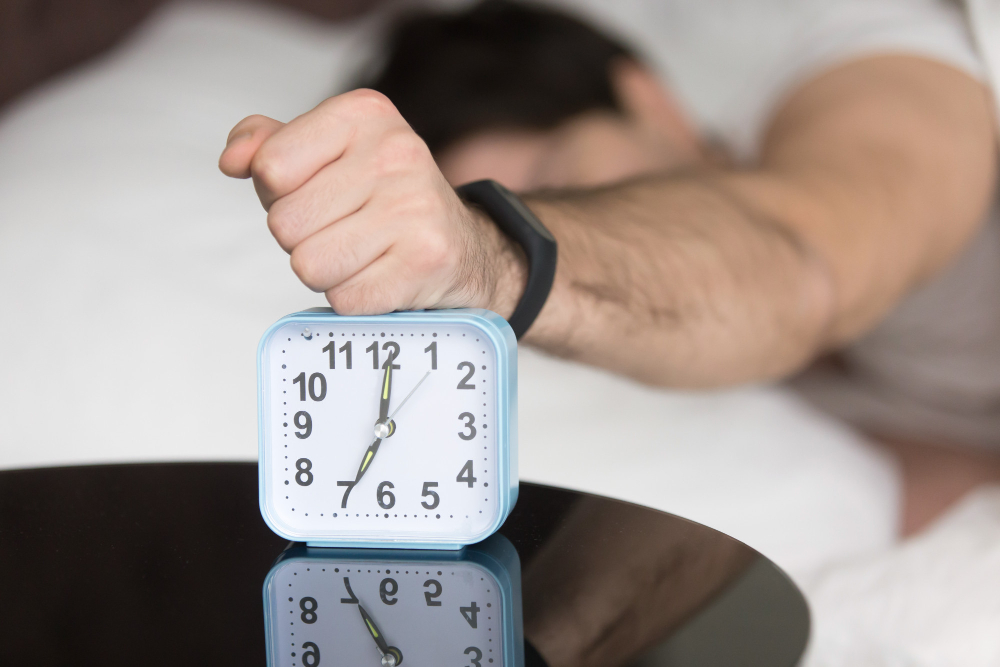
Are you a type of individuals who can’t resist the lure of the snooze button? If you happen to usually end up drifting again to sleep for only a few extra valuable minutes (or perhaps a few further rounds), you’re positively not alone!
A 2025 examine from researchers at Mass Common Brigham, revealed in Scientific Reviews, highlights that about half of these surveyed—over 21,000 Sleep Cycle app customers—are responsible of this morning ritual. Actually, a placing 45% of contributors admitted to hitting that tempting snooze button greater than 80% of the time!
However why accomplish that many people battle to leap off the bed when that alarm clock rings? Let’s dive into the behavioral science behind this frequent dilemma and share sensible methods that can assist you conquer morning grogginess for good. Say goodbye to the snooze cycle and whats up to a extra energized begin to your day!
The Behavioral Science of Hitting Snooze
Sleep is a crucial a part of our day by day lives, but many people battle to profit from it. By understanding the completely different sleep phases that affect our well-being, the position of our circadian rhythms, and the psychological components that affect temptation to hit snooze, we are able to enhance our high quality of relaxation and our day by day lives.
Understanding Sleep Cycles
Whereas your physique and mind develop into much less lively throughout sleep, quite a few restorative capabilities happen, corresponding to power storage and conservation, self-repair and restoration, and mind upkeep. All of this takes place whereas your mind cycles by means of two phases, damaged down into 5 phases:
Part 1: Non-REM Sleep
- Stage 1: The transition between wakefulness and sleep.
- Stage 2: Mild sleep. Coronary heart charge slows and physique temperature decreases.
- Stage 3: Gradual-wave sleep. Coronary heart charge continues to lower, blood strain drops, and respiration is sluggish and rhythmic.
- Stage 4: Deep sleep. Blood strain, coronary heart charge, and respiration are all very low. It isn’t straightforward to get up from deep sleep.
Part 2: REM Sleep
- Stage 5: REM sleep. A lighter stage wherein blood strain, coronary heart charge, and respiration enhance, and dreaming happens.
You usually cycle by means of the non-REM phases a number of occasions earlier than reaching REM sleep. A whole cycle takes 90 to 120 minutes, and most of the people full 4 to six cycles per night time to get 6 to 9 hours of high quality sleep. When an alarm wakes you up in the course of a sleep cycle, particularly REM sleep, you’ll be able to really feel drained and groggy.
Feeling disoriented or moody after waking is a symptom of a short lived situation often known as sleep inertia. Sleep inertia usually lasts 30 to 60 minutes, although analysis exhibits it could possibly persist for as much as 2 hours. Sleep inertia could cause slower response occasions, poor short-term reminiscence, and slower pondering, reasoning, remembering, and studying, in line with the Facilities for Illness Management and Prevention.
Sleep Chronotypes
Your circadian rhythm is the 24-hour cycle that controls bodily processes and your sleep-wake cycle. Your sleep chronotype is the way in which you expertise your circadian rhythm—the way you understand your self to be most awake, productive, and environment friendly in day by day duties. Analysis means that sleep chronotypes are inherited traits that may affect whether or not you depend on the snooze button or not.
Evening owls, often known as wolves, could be extra more likely to hit snooze as a result of they usually really feel extra productive within the night and keep up later. Then again, lions who go to mattress early and get up early are the least more likely to really feel like they want a couple of further minutes to sleep.
Psychological and Emotional Elements
On the Higher Sleep Council, we consider {that a} comfy mattress is the inspiration for night time’s sleep. The snooze button can present short-term psychological consolation, providing a transition interval between sleep and wakefulness. Ultimately, you’re merely delaying the begin to your day.
The snooze button can trick your mind into ignoring your first alarm, thus making a dangerous behavior. Relatively than your mind recognizing that it’s time to get up, your thoughts can start to interpret the alarm as an indication you have got a couple of extra minutes to sleep. The behavior of hitting snooze each morning can be an indication of an underlying sleep problem, corresponding to obstructive sleep apnea or persistent insomnia.
Avoiding tasks is one more reason why some folks hit the snooze button. Sneaking in a couple of extra minutes of sleep may also help scale back the overwhelming feeling of beginning day by day duties and fulfilling obligations. In actuality, snoozing your alarm postpones stress and the calls for of on a regular basis life.
Smacking the snooze button may characterize an inside battle between eager to sleep and needing to get up. You possibly can justify this cognitive battle by pondering to your self, “It’s only a few extra minutes.” Nevertheless, the battle doesn’t go away after these jiffy are up. Your physique nonetheless must relaxation, and your schedule requires you to stand up.
Methods to Scale back Morning Grogginess and Lose the Snooze Button
Creating a soothing sleep surroundings is an effective way to make sure you get a rejuvenating night time of relaxation. Your bed room ought to align with good sleep hygiene, which entails being conscious of habits that encourage higher relaxation that can assist you keep refreshed and conscious throughout the day. Maintain your bed room cooler at night time and use blankets in the event you get chilly. Set up high quality light-blocking curtains or put on an eye fixed masks to dam out exterior mild and the early morning solar. Use earplugs or a noise machine if noise exterior your room disturbs your sleep.
Different suggestions for bettering sleep hygiene embody:
- Go to mattress and wake on the similar time every single day, even on the weekends.
- Eat wholesome, nutritious meals at mealtimes and keep away from bedtime snacks.
- Train repeatedly, besides inside 2 to 4 hours earlier than bedtime.
- Keep away from caffeine and alcohol for two hours earlier than bedtime.
- Go to mattress solely whenever you’re drained.
Let’s check out a couple of extra methods to interrupt the behavior of utilizing the snooze button most of the time.
Rethink Your Alarm
Set your alarm for the proper time. Setting your clock earlier or setting a number of alarms simply results in an excuse to hit snooze. For individuals who hit snooze greater than twice, attempt setting two alarms 5 minutes aside. Higher but, transfer the second alarm to a different a part of the bed room, so you must get off the bed to show it off.
Like timing, the sound of your alarm could make or break the morning. Beeping and buzzing could cause an disagreeable awakening. Nature sounds and mellow music assist ease you from sleep to wakefulness.
Set up a Higher Sleep Routine
Creating and sustaining a constant bedtime routine helps set up a predictable sample of calming rest and indicators your physique and thoughts that it’s time to get able to sleep. Actions in your bedtime routine may embody:
- 2 Hours Earlier than Bedtime: Sip a small glass of water or a sleep-inducing beverage, eat a mild snack, or take a heat (not scorching) bathtub.
- 45 Minutes Earlier than Bedtime: Flip off gadgets and screens that emit blue mild, apply self-care like washing your face or brushing your enamel, or set the temper with aromatherapy.
- 15-30 Minutes Earlier than Bedtime: Learn a e book, take heed to enjoyable music, write in a journal, stretch evenly, do yoga, meditate, or apply mindfulness.
Get Loads of Pure Mild
Pure daylight impacts your circadian rhythm, sleep cycles, and melatonin manufacturing, a sleep-inducing hormone. A 2019 examine revealed within the Nationwide Library of Drugs discovered that pure mild may also help you:
- Fall Asleep Earlier: Extra publicity to pure daylight will increase the possibilities of falling asleep earlier within the night, so long as publicity to synthetic mild is proscribed.
- Sleep Longer: Daylight improves sleep length by growing melatonin manufacturing, which helps you sleep higher by means of the night time.
- Enhance Sleep High quality: As little as half-hour of pure daylight can enhance sleep high quality, particularly when mixed with common train.
Follow Mindfulness
Mindfulness could be a part of a bedtime routine, and it’s additionally an effective way to get up within the morning. The apply includes being current within the second and conscious of your ideas, emotions, and environment with out judgment. A number of easy mindfulness methods embody:
- Conscious Respiratory: Sit or lie down in a cushty place and shut your eyes. Breathe in deeply and rely to 4. Maintain your breath for a rely of 4, and slowly exhale by means of your mouth for a rely of six. Repeat for five to 10 minutes.
- Physique Scan Meditation: Lie down in a cushty place and shut your eyes. Begin at your toes and see any sensations you’re feeling. Slowly transfer your consideration up your physique, noticing any areas of stress and enjoyable them. Proceed till you attain the highest of your head.
- Conscious Journaling: Take 10 to fifteen minutes to write down within the morning. Suppose positively and write about the way you need the day to unfold. You possibly can pair this with night journaling to trace how your imaginative and prescient for the day aligns with the day you truly had.
- Guided Imagery: Shut your eyes and picture an invigorating place, corresponding to a park. Image your self within the house and have interaction all your senses: hear the swings, really feel the breeze, odor the grass. Spend a couple of minutes within the visualization.
Break Free From Your Snooze Button
Breaking the cycle of hitting the snooze button requires a mix of understanding sleep patterns, recognizing psychological triggers, and implementing efficient methods to begin the day refreshed. By prioritizing high quality sleep, establishing a constant wake-up routine, and addressing the underlying causes in your snoozing habits, you’ll be able to reclaim these valuable morning minutes.
Embrace the problem, bid farewell to grogginess, and welcome every new day with power and objective. A extra invigorated you awaits—let’s make the morning routine one to sit up for!