How a Stroke Impacts Sleep: Restoration Information for Higher Relaxation After Stroke (2025)
Fast reply: Strokes injury mind areas controlling sleep (brainstem, hypothalamus, thalamus), inflicting insomnia, sleep apnea, and disrupted circadian rhythms in lots of survivors. These sleep issues sluggish restoration by stopping neural therapeutic throughout deep sleep and enhance your danger of one other stroke. Remedies embrace CPAP for apnea, sleep hygiene for insomnia, and circadian rhythm remedy—all proven to enhance stroke outcomes when began early.
Powered by Amerisleep, EarlyBird brings collectively a devoted crew of sleep science coaches, engineers, and product evaluators. We meticulously study Amerisleep’s household of merchandise utilizing our distinctive product methodology in Amerisleep’s state-of-the-art laboratory. Our dedication to sustainability is mirrored in our use of eco-friendly foam in our merchandise. Every article we publish is correct, supported by credible sources, and frequently up to date to include the most recent scientific literature and knowledgeable insights. Belief our prime mattress choices, in your private sleep wants.
Key Takeaways
- Mind injury location issues: Strokes affecting the brainstem, hypothalamus, or thalamus immediately disrupt sleep regulation—even small strokes in these areas trigger extreme sleep issues
- Sleep apnea is frequent after stroke: Many stroke survivors develop or worsen sleep apnea, inflicting respiration pauses that cut back mind oxygen and enhance stroke recurrence danger
- Poor sleep slows restoration: With out deep sleep, your mind can not consolidate rehabilitation positive aspects, restore neural injury, or construct new pathways round injured areas
- Circadian rhythm disruption: Stroke survivors usually expertise reversed sleep schedules (awake at night time, asleep throughout day) that resist regular sleep hygiene makes an attempt
- Therapy considerably improves outcomes: CPAP remedy, sleep hygiene, and CBT-I all enhance each sleep high quality and purposeful restoration
- Early intervention is vital: Sleep issues can worsen over time if untreated—screening and therapy ought to start throughout acute hospital keep
- Fast hyperlinks: See additionally how sleep may help with hypertension, what a sleep examine is and how a sleep apnea check works.
When a stroke strikes, it doesn’t simply have an effect on motion or speech. It may well fully upend your means to get night time’s relaxation.
Many stroke survivors discover themselves mendacity awake at night time, scuffling with insomnia, respiration issues, or unusual sleep schedules that go away them exhausted through the day.
These sleep disruptions occur as a result of a stroke damages the mind’s management facilities that regulate when and the way effectively you sleep.
And poor sleep doesn’t simply make you drained. It may well decelerate your restoration and even enhance your possibilities of having one other stroke.
The excellent news is that docs now perceive this connection higher than ever earlier than. With the fitting therapies and way of life adjustments, you possibly can handle these sleep issues and provides your mind the remainder it must heal.
Learn on to find how strokes disrupt sleep, what signs to observe for, and the sensible steps you possibly can take to sleep higher and get better stronger.
How Does Poor Sleep Enhance Your Stroke Danger?
- Sleep problems injury your cardiovascular system via oxygen deprivation, blood strain spikes, and persistent irritation—creating circumstances that make strokes extra doubtless even earlier than one happens.
Sleep issues don’t simply occur after a stroke. They will truly trigger strokes within the first place, making a harmful cycle the place poor sleep damages your blood vessels and mind over time.
Poor sleep and stroke have a bidirectional relationship, which means each may cause the opposite. Sleep problems like sleep apnea, persistent insomnia, and irregular sleep schedules injury your cardiovascular system in ways in which make strokes extra doubtless.
The Cumulative Impact
Sleep issues hardly ever exist in isolation. Many individuals have a number of sleep points directly—maybe sleep apnea mixed with insomnia, or brief sleep length with poor high quality.
Analysis
exhibits
that the extra sleep issues you’ve, the upper your stroke danger climbs. Individuals with 5 or extra sleep disturbance signs (brief sleep, poor high quality, loud night breathing, respiration pauses, and many others.) face greater than 5 instances the stroke danger in comparison with these with good sleep.
This cumulative impact explains why addressing sleep issues represents such an vital alternative for stroke prevention. Even modest enhancements in sleep high quality and length can considerably cut back your danger.
The Good Information: Sleep Therapy Reduces Stroke Danger
Whereas the connection between poor sleep and stroke sounds alarming, there’s an encouraging flip aspect. Treating sleep problems truly reduces your stroke danger, generally dramatically.
Research
of
individuals utilizing CPAP machines for sleep apnea present vital reductions in stroke prevalence once they use the gadget frequently (not less than 4 hours per night time). Their blood strain improves, irritation markers lower, and the damaging oxygen drops that injury blood vessels cease occurring.
Equally, individuals who
enhance
their sleep length and high quality via cognitive behavioral remedy or way of life adjustments
present
higher
cardiovascular well being markers and decreased stroke danger over time.
Which means that the sleep issues growing your stroke danger aren’t everlasting sentences. With correct analysis and therapy, you possibly can reverse a lot of the injury and considerably decrease your possibilities of having a stroke.
Who Ought to Get Screened for Sleep Issues
Given the sturdy connection between sleep issues and stroke danger, sure individuals ought to actively search sleep problem screening even when they really feel their sleep is “okay”:
- Anybody with hypertension that’s tough to regulate with medicine
- Individuals who snore loudly or have witnessed respiration pauses throughout sleep
- These with a household historical past of stroke or coronary heart illness
- Anybody experiencing extreme daytime sleepiness or fatigue regardless of spending satisfactory time in mattress
- Individuals with irregular work schedules or persistent problem falling or staying asleep
- These with weight problems, diabetes, or metabolic syndrome
Early detection and therapy of sleep problems symbolize one of the crucial highly effective instruments obtainable for stroke prevention. In contrast to many stroke danger elements you possibly can’t management (like age or household historical past), sleep is one thing you possibly can actively enhance with the fitting interventions.
What Occurs in Your Mind With a Stroke?
Your mind controls sleep via a number of specialised facilities that work collectively like a crew. When a
stroke
occurs, it may well injury these vital areas and throw your total sleep system off stability.
Harm to Sleep Management Facilities
A stroke can
hurt
three key mind areas that handle your sleep: the brainstem, hypothalamus, and thalamus. The brainstem acts like an influence swap for sleep and wakefulness, whereas the hypothalamus controls your inner physique clock.
The thalamus filters info and helps you keep in deep sleep. When a stroke damages any of those areas, you may develop new sleep issues or discover that present points get a lot worse.
Even a small stroke within the improper location can disrupt how your mind sends alerts to go to sleep or get up.
Adjustments in Mind Exercise and Neural Indicators
After a stroke, your mind’s electrical exercise adjustments in ways in which immediately have an effect on sleep high quality. The mind usually produces particular wave patterns throughout sleep, together with delta waves that make it easier to attain deep, restorative relaxation.
Stroke survivors usually present disrupted wave patterns that forestall them from biking via sleep levels correctly. Irritation within the mind after a stroke additionally interferes with the chemical messengers that regulate sleep.
These neurological adjustments clarify why many individuals really feel like their sleep is lighter, extra fragmented, and fewer refreshing than earlier than their stroke.
Contributing Components Past Mind Harm
Sleep issues after a stroke don’t solely come from bodily mind injury. A number of different elements pile on prime of the neurological adjustments and make your sleep even worse.
- Psychological Components (Anxiousness and Despair): Anxiousness about having one other stroke or melancholy about misplaced skills retains your thoughts racing at night time when you need to be winding down for sleep.
- Environmental Challenges: Hospital noise, uncomfortable beds, frequent very important signal checks, and the stress of being in an unfamiliar restoration setting all disrupt your pure sleep patterns.
- Medicine Aspect Results: Some medicines prescribed after a stroke, together with sure blood strain medication and steroids, can intervene together with your means to go to sleep or keep asleep.
- Lowered Bodily Exercise: When stroke signs restrict your motion otherwise you spend a lot of the day resting, your physique doesn’t construct up sufficient bodily tiredness to sleep effectively at night time.
These contributing elements usually work collectively and create a cycle the place every downside makes the others worse. Addressing them alongside medical therapies offers you the most effective probability of bettering your sleep high quality.
What Sleep Issues Do Stroke Survivors Expertise?
- Strokes injury three vital areas—the brainstem (sleep on/off swap), hypothalamus (physique clock), and thalamus (deep sleep filter)—disrupting the neural alerts that management when and the way effectively you sleep.
Sleep issues present up in numerous methods for stroke survivors, and also you may expertise one situation or a number of on the identical time. Understanding these frequent patterns helps you acknowledge what’s occurring and search the fitting therapy.
Insomnia and Issue Staying Asleep
Many stroke survivors battle to go to sleep or get up a number of instances all through the night time. One of these insomnia impacts a big share of individuals recovering from stroke and might final for months and even years.
- Hassle Initiating Sleep: Your mind might take for much longer than regular to transition into sleep mode, leaving you mendacity awake for hours.
- Frequent Nighttime Wakings: You may go to sleep initially however get up a number of instances through the night time and discover it laborious to float again off.
- Early Morning Awakening: Some stroke survivors get up far too early and might’t return to sleep, even once they nonetheless really feel exhausted.
These patterns go away you feeling drained and annoyed, which regularly makes the insomnia worse as nervousness about sleep builds up night time after night time.
Sleep-Disordered Respiration (Apnea)
Sleep apnea develops or will get worse in many individuals after a stroke, inflicting repeated pauses in respiration all through the night time. Your airway both turns into blocked (obstructive sleep apnea) or your mind fails to ship correct respiration alerts (central sleep apnea).
- Respiration Pauses: Your respiration stops for 10 seconds or longer a number of instances per hour, decreasing oxygen movement to your mind.
- Loud Loud night breathing and Gasping: You may snore closely or all of the sudden gasp for air as your physique fights to restart respiration.
- Disrupted Sleep Cycles: Every respiration pause pulls you out of deep sleep, even should you don’t totally get up or bear in mind it occurring.
Sleep apnea not solely prevents restful sleep but in addition places additional pressure in your coronary heart and blood vessels, growing your danger of one other stroke.
Two Forms of Sleep Apnea
Sleep apnea is available in two essential varieties, and understanding which sort you’ve determines the fitting therapy method.
Obstructive sleep apnea occurs when your throat muscle mass loosen up an excessive amount of throughout sleep, inflicting your airway to slender or shut fully. Your chest and stomach maintain attempting to breathe—you possibly can see them transferring up and down—however air can’t get via the blocked passage.
That is the commonest sort after a stroke and sometimes pertains to elements like extra weight, massive tonsils, or the pure leisure that occurs throughout sleep.
Central sleep apnea happens when your mind fails to ship the right alerts to your respiration muscle mass. In contrast to obstructive apnea, your airway stays open, however your chest and stomach merely cease transferring as a result of the mind’s management heart isn’t telling them to breathe.
Stroke can immediately trigger this kind by damaging the mind areas that regulate computerized respiration, notably if the stroke affected your brainstem or sure elements of your mind that management respiration patterns.
Some individuals develop a mixture of central and obstructive sleep apnea after a stroke. Your physician can decide which type you’ve via a sleep examine that displays each your airflow and your respiration muscle exercise all through the night time.
This distinction issues as a result of therapies differ—CPAP works effectively for obstructive apnea, whereas central apnea generally requires completely different gadgets or addressing the underlying mind damage.
Disrupted Circadian Rhythms and Sleep-Wake Cycles
Your inner physique clock, which usually tells you when to really feel sleepy or alert, can get fully thrown off after a stroke. The injury to your mind’s timekeeping facilities creates irregular sleep schedules that don’t match a standard day-night sample.
- Excessive Daytime Sleepiness: You may really feel overwhelming drowsiness through the day, even after spending hours in mattress at night time.
- Reversed Sleep Schedules: Some individuals discover themselves wakeful all night time and sleeping through the day, unable to reset their rhythm.
- Unpredictable Sleep Timing: Your physique won’t ship constant alerts about when to sleep, making it laborious to determine any routine.
This disruption impacts extra than simply sleep as a result of your circadian rhythm additionally controls hormone launch, physique temperature, and therapeutic processes your physique wants for stroke restoration.
Strategic gentle publicity may help reset your inner clock—brilliant gentle within the morning should you can’t go to sleep at night time, or brilliant gentle within the night should you’re falling asleep too early. See the therapy part under for particular timing steering.
How one can Acknowledge the Signs of Sleep Points Throughout Restoration?
- Sleep issues reveal themselves via nighttime warning indicators (loud loud night breathing, gasping, tossing and turning) and daytime penalties (crushing fatigue, psychological fog, temper adjustments) that intervene with stroke restoration.
Sleep issues after a stroke create warning indicators that present up each through the night time and all through your day. Recognizing these signs early helps you get therapy earlier than they intervene an excessive amount of together with your restoration.
Nighttime Warning Indicators
Your physique sends clear alerts throughout sleep that one thing isn’t working proper. Take note of these nighttime signs as a result of they usually level to particular sleep problems that want medical consideration.
- Loud Loud night breathing: Loud night breathing that’s loud sufficient to disturb others within the room usually signifies your airway is partially blocked throughout sleep.
- Gasping or Choking: Instantly waking up gasping for air means your respiration stopped and your physique needed to drive itself awake to restart it.
- Tossing and Turning: Spending hours awake in mattress or waking up repeatedly all through the night time alerts that your mind can’t keep regular sleep cycles.
A member of the family or caregiver may discover these signs earlier than you do, particularly the respiration issues that occur when you’re unconscious.
Daytime Penalties
The results of poor sleep don’t keep within the bed room as a result of they spill over into each a part of your waking hours. These daytime signs immediately impression your means to take part in rehabilitation and get better out of your stroke.
- Crushing Fatigue: You’re feeling exhausted regardless of how a lot time you spent in mattress, making it laborious to finish fundamental every day actions or remedy workouts.
- Psychological Fog: Your reminiscence, focus, and talent to study new abilities undergo when your mind doesn’t get the restorative sleep it wants.
- Temper Adjustments: Irritability, nervousness, and melancholy develop into extra intense when sleep deprivation wears down your emotional resilience.
Morning complications may also sign sleep apnea, as your mind didn’t obtain sufficient oxygen through the night time and desires time to get better after you get up.
How Does Sleep Place Have an effect on Stroke Restoration?
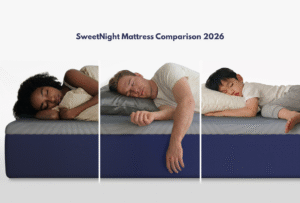
- Aspect-lying in your unaffected aspect with pillow assist or elevated head positioning (30-45 levels) improves respiration and reduces aspiration danger, whereas again and abdomen sleeping needs to be prevented.
Your sleep place immediately impacts respiration, circulation, and aspiration danger throughout restoration.
Aspect-Mendacity on Unaffected Aspect (Most Advisable)
- Reduces strain on affected limbs whereas sustaining security
- Opens airways higher than again sleeping
- Use pillows to assist affected arm in barely flexed place
- Place pillow between knees to take care of hip alignment
Elevated Head Place (30-45 Levels)
- Reduces swelling in mind tissue throughout acute restoration part
- Helps forestall aspiration you probably have swallowing difficulties
- Contemplate an adjustable mattress and mattress combo for constant positioning
- Improves respiration for these with sleep apnea
Positions to Keep away from
- Again sleeping with out elevation (will increase apnea danger)
- Sleeping on affected aspect (may cause shoulder ache and restrict blood movement)
- Abdomen sleeping (strains neck and makes respiration tougher)
Work together with your bodily therapist to establish the most secure positioning technique in your particular stroke location and mobility limitations.
Why Does Sleep Matter for Stroke Restoration?
- Deep sleep permits your mind to consolidate rehabilitation positive aspects, restore broken tissue, and construct new neural pathways—with out it, restoration slows and your danger of one other stroke will increase considerably.
Sleep isn’t nearly feeling rested after a stroke as a result of it immediately controls how effectively your mind and physique heal. Getting high quality sleep could make the distinction between a robust restoration and ongoing struggles together with your well being.
Sleep’s Function in Bodily and Cognitive Therapeutic
Your mind does most of its restore work when you sleep, making these nighttime hours important for stroke restoration. Throughout deep sleep, your physique clears out waste merchandise from mind tissue and strengthens the brand new neural connections you’re constructing via rehabilitation.
- Reminiscence Consolidation: Sleep helps switch the bodily abilities and data you follow throughout remedy from short-term reminiscence into long-term storage.
- Tissue Restore: Your physique releases progress hormones throughout sleep that rebuild broken mind cells and strengthen weakened muscle mass.
- Neural Plasticity: Deep sleep levels permit your mind to kind new pathways round broken areas, which is the way you regain misplaced features.
With out satisfactory sleep, the workouts and therapies you full through the day don’t stick as effectively as a result of your mind lacks the time it must course of and save these enhancements.
Elevated Danger of Secondary Stroke
Poor sleep, particularly when attributable to sleep apnea, considerably raises your possibilities of having one other stroke. The repeated drops in oxygen and spikes in blood strain throughout respiration pauses put monumental stress in your cardiovascular system.
- Blood Stress Surges: Every time your respiration stops, your blood strain shoots up as your physique panics and tries to restart respiration.
- Irregular Coronary heart Rhythms: Sleep apnea triggers irregular heartbeats that may kind blood clots, which then journey to your mind.
- Persistent Irritation: Ongoing sleep issues maintain your physique in a harassed state that damages blood vessel partitions and will increase clotting danger.
Individuals with untreated sleep apnea after a stroke face double and even triple the chance of getting one other stroke in comparison with those that sleep effectively.
Affect on General Well being Outcomes
Sleep high quality impacts each measure docs use to trace stroke restoration progress. The connection between poor sleep and worse outcomes exhibits up throughout bodily perform, psychological well being, and long-term survival charges.
- Despair Improvement: Sleep issues enhance your danger of growing melancholy, which then makes it even tougher to take part in rehabilitation and social actions.
- Cognitive Decline: Ongoing sleep deprivation hurries up reminiscence loss and pondering issues that may exist already from the stroke itself.
- Mortality Danger: Stroke survivors with extreme, untreated sleep problems
face
larger loss of life charges throughout the first few years after their stroke.
Treating sleep issues isn’t elective or simply about consolation as a result of it’s a vital a part of giving your self the very best probability at a full restoration.
How one can Optimize Your Bed room for Stroke Restoration Sleep?
- Management temperature (65-68°F), handle lighting (blackout curtains, morning brilliant gentle), guarantee security (clear pathways, movement sensors), reduce noise, and select a medium-firm reminiscence foam mattress with correct pillow assist.
Your bed room setting performs a vital function in sleep high quality when your mind’s pure regulation is broken.
Temperature Management
- Preserve room between 65-68°F (18-20°C) for optimum sleep
- Use breathable, moisture-wicking bedding supplies
- Contemplate a fan for air circulation (ambient noise additionally helps masks sudden sounds)
Lighting Administration
- Set up blackout curtains to get rid of sleep-disrupting gentle
- Use red-spectrum night time lights should you want toilet lighting (doesn’t suppress melatonin)
- Get brilliant gentle publicity inside Half-hour of waking to reset circadian rhythm
Security Modifications
- Clear pathways to toilet (take away tripping hazards)
- Set up motion-sensor lighting alongside flooring for nighttime security
- Preserve emergency name button or telephone inside simple attain
- Contemplate mattress rails you probably have mobility considerations
Sound Setting
- Use ambient noise to masks sudden environmental sounds
- Get rid of sources of intermittent noise (ticking clocks, dripping taps)
- Contemplate single-room occupancy if associate’s actions disturb you
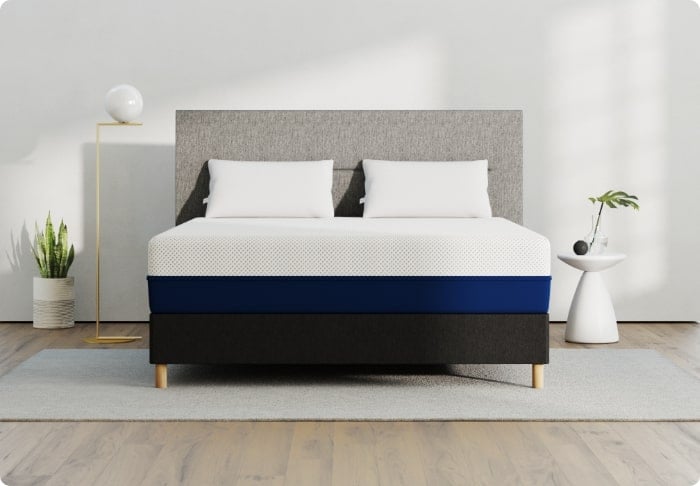
Mattress and Pillow Choice
- Select medium-firm reminiscence foam mattress for strain reduction
- Use a number of pillows to assist affected limbs in impartial positions
- Contemplate adjustable base should you want elevated positioning
- Change mattress if it’s over 8 years previous or exhibits sagging
What Are Doable Therapy and Administration Approaches?
- CPAP machines for apnea, strategic brilliant gentle publicity for circadian rhythm issues, constant sleep schedules, and cognitive behavioral remedy for insomnia all considerably enhance stroke restoration outcomes when began early.
Treating sleep issues after a stroke requires a mixture of medical interventions and private way of life adjustments. Your healthcare crew can provide a number of confirmed options that focus on the precise sleep points you’re experiencing.
Medical Screening and Analysis
Docs ought to consider each stroke survivor for sleep problems as a part of normal restoration care. A sleep specialist may order an in a single day sleep examine that displays your respiration, coronary heart price, mind waves, and oxygen ranges to pinpoint precisely what’s disrupting your relaxation.
This testing reveals whether or not you’ve sleep apnea, insomnia, or circadian rhythm issues that want particular therapy. Getting an correct analysis means you can begin the fitting remedy as an alternative of guessing at options that may not work in your explicit downside.
CPAP and Different Respiration Remedies
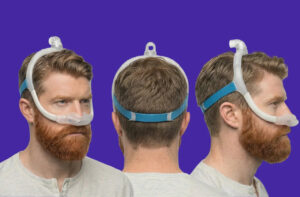
Steady Constructive Airway Stress (CPAP) machines deal with sleep apnea by delivering a gentle stream of air via a masks you put on at night time. Consider it like a mild fan that creates simply sufficient air strain to carry your airway open, just like how air retains a balloon inflated. This fixed movement prevents your throat muscle mass from collapsing and blocking your respiration.
The machine works quietly beside your mattress when you sleep, sending pressurized air via a tube linked to a masks that matches over your nostril, mouth, or each. The regular strain acts as an invisible splint that retains your airway open all through the night time, stopping the respiration pauses that jolt you out of deep sleep dozens and even a whole lot of instances per night time.
When CPAP works correctly, your mind receives regular oxygen all night time lengthy, which permits it to finish the restore work important for stroke restoration. Many individuals discover enhancements inside days—waking up extra refreshed, pondering extra clearly throughout remedy classes, and having extra power all through the day.
Whereas CPAP takes some getting used to, it may well dramatically cut back your danger of one other stroke and enhance your power ranges through the day. Different choices embrace oral home equipment that reposition your jaw or, in extreme instances, surgical procedures that take away tissue blocking your airway.
Utilizing Mild to Reset Your Inside Clock
Vibrant gentle publicity at strategic instances may help retrain your mind’s inner clock when stroke has thrown off your sleep-wake rhythm. The secret is timing the sunshine accurately primarily based in your particular downside.
If you happen to can’t go to sleep at night time and battle to get up within the morning: Expose your self to brilliant gentle as quickly as potential after waking up, ideally throughout the first Half-hour to an hour. Spend 20-Half-hour close to a sunny window, take a brief morning stroll outdoor, or sit in entrance of a specialised brilliant gentle remedy field (10,000 lux) whereas consuming breakfast.
However should you go to sleep too early within the night and get up earlier than daybreak: Use brilliant gentle publicity within the late afternoon or early night as an alternative, roughly 1-3 hours earlier than your required bedtime. This night gentle tells your mind to remain alert a bit longer and shifts your sleep schedule later, serving to you keep awake till a extra regular bedtime and sleep later into the morning.
Pure daylight works finest, however should you reside in a local weather with restricted daylight or your mobility makes it laborious to get exterior, a light-weight remedy field supplies the identical advantages. You may learn, eat, or do different actions throughout your gentle remedy session—the vital half is having that brilliant gentle attain your eyes on the proper time of day.
Discuss together with your healthcare crew earlier than beginning gentle remedy for sleep, particularly you probably have eye issues or take medicines that enhance gentle sensitivity. Most individuals see enhancements of their sleep schedule inside 1-2 weeks of constant every day gentle publicity.
Way of life Modifications
Easy adjustments to your every day habits can considerably enhance sleep high quality with out medicine. Shedding even a small quantity of weight reduces strain in your airway and might reduce sleep apnea signs.
Avoiding consuming something within the night that relaxes throat muscle mass an excessive amount of and blocks respiration. Going to mattress and waking up on the identical time on daily basis helps reset your circadian rhythm and trains your physique when to really feel sleepy.
Addressing Psychological Well being
Treating nervousness and melancholy immediately improves sleep as a result of these circumstances gas the racing ideas and fear that maintain you awake. Remedy approaches like cognitive behavioral remedy for insomnia (CBT-I) train you strategies to calm your thoughts and break the cycle of sleep nervousness.
Your physician may also prescribe antidepressants or anti-anxiety medicines that assist with each your temper and your sleep. Addressing the emotional impression of your stroke isn’t a luxurious as a result of your psychological well being and sleep high quality are deeply linked to your bodily restoration.
Subsequent Steps for Higher Sleep
You now perceive how stroke impacts sleep and why getting high quality relaxation issues in your restoration. Take these concrete steps in the present day to begin bettering your sleep and provides your mind the therapeutic time it wants.
Small adjustments add up over time, and also you don’t must sort out all the things directly. Construct as you uncover what helps your physique relaxation and get better finest.
This Week:
- Begin a detailed sleep journal the place you observe bedtime, wake time, nighttime wakings, and next-day power ranges—deliver this knowledge to your physician
- Take the STOP-BANG questionnaire (obtainable on-line) to evaluate your sleep apnea danger—scores over 3 point out excessive danger requiring speedy medical analysis
- Optimize your bed room: set thermostat to 65-68°F, set up blackout curtains, take away digital gadgets, and clear tripping hazards
This Month:
- Schedule appointments together with your major care doctor and request a referral to a sleep specialist licensed in treating stroke sufferers
- Implement constant sleep schedule: go to mattress and wake on the identical time on daily basis (together with weekends) to reset your circadian rhythm
- Create a 30-minute wind-down routine: dim lights, keep away from screens, follow mild stretching or deep respiration workouts
Ongoing Restoration:
- If prescribed CPAP: use it each night time for not less than 4 hours to see advantages—masks match points are solvable, don’t surrender after one night time
- Monitor progress in your sleep journal and share together with your healthcare crew at each appointment—your physician wants this knowledge to regulate therapy
- Have interaction in every day bodily exercise (with medical clearance) however end train not less than 3 hours earlier than bedtime to keep away from sleep interference
Emergency Warning Indicators:
- Contact your physician instantly should you expertise: sudden enhance in daytime sleepiness, witnessed respiration pauses throughout sleep, morning complications mixed with confusion, or chest ache throughout sleep
Don’t attempt to sort out all the things directly. Decide 2-3 actions from the “This Week” listing, grasp these, then add extra enhancements as you construct sustainable sleep habits that assist your restoration.
FAQs
Can a stroke trigger everlasting sleep issues?
Sure, some stroke survivors expertise long-term or everlasting sleep points, particularly if the stroke broken particular sleep-regulating areas of the mind, however many sleep issues enhance with correct therapy and time.
How quickly after a stroke do sleep issues often begin?
Sleep issues can start instantly after a stroke or develop progressively over the next weeks and months as your mind adjusts to the damage.
Will sleeping extra assist me get better quicker from a stroke?
High quality sleep (not simply amount) helps quicker restoration as a result of your mind does vital restore work throughout deep sleep levels, so concentrate on getting restful, uninterrupted sleep relatively than simply spending extra hours in mattress.
Is it regular to really feel extra drained through the day after a stroke?
Extreme daytime fatigue is quite common after a stroke and sometimes alerts an underlying sleep problem like sleep apnea or insomnia that wants medical analysis and therapy.
Can stroke survivors sleep on any mattress?
Medium-firm reminiscence foam mattresses present the strain reduction and spinal assist most stroke survivors want, particularly if mobility is proscribed. Keep away from mattresses which might be too mushy (tough to reposition) or too agency (create strain factors).
What sleep place is most secure after a stroke?
Aspect-lying in your unaffected aspect is usually most secure, utilizing pillows to assist your affected arm and leg. Elevating your head 30-45 levels may also assist with respiration issues and cut back aspiration danger.
What number of hours ought to stroke survivors sleep?
Purpose for 7-9 hours of high quality sleep per night time, plus daytime naps if wanted—however look ahead to extreme daytime sleeping (over 10 whole hours) which can sign melancholy or untreated sleep apnea requiring medical consideration.
Will sleep issues after stroke ever go away?
Some sleep issues enhance naturally inside 3-6 months because the mind heals, however many survivors have persistent sleep points requiring ongoing therapy—early intervention considerably improves long-term outcomes.
Does sleeping place have an effect on stroke danger?
Aspect sleeping (particularly left aspect) reduces sleep apnea severity and should decrease stroke danger in comparison with again sleeping, which permits the tongue to dam airways extra simply.
Will sleep medicine assist after a stroke?
That requires cautious consideration, as a result of some sleep medicines can work together with different medicines or worsen respiration issues. Your physician might suggest non-medication therapies first (like CPAP for apnea or cognitive behavioral remedy for insomnia) earlier than contemplating prescription sleep aids.
Ought to stroke survivors use weighted blankets?
Solely with medical clearance—weighted blankets might enhance respiration problem you probably have respiratory points and could be problematic you probably have restricted mobility to take away the blanket independently.
Can sleep apnea truly trigger a stroke, or does it solely occur after one?
Sleep apnea can each trigger an preliminary stroke (by creating circumstances that injury blood vessels) and develop or worsen after a stroke, making a harmful cycle that will increase your danger of one other stroke.
Do I want a sleep examine if I’m already exhausted on a regular basis?
Sure, a sleep examine helps docs establish the precise sort of sleep problem you’ve to allow them to suggest the simplest therapy as an alternative of guessing at options.
Will I want to make use of a CPAP machine endlessly if I begin one?
Many individuals want CPAP long-term, however some can cut back or cease utilizing it after making way of life adjustments like reducing weight or treating different contributing elements, so talk about your particular scenario together with your sleep specialist.
Can a stroke occur throughout sleep?
Sure, these are known as “wake-up strokes” as a result of individuals uncover signs once they get up. Sleep-related strokes occur extra steadily in individuals with untreated sleep apnea, because the repeated respiration pauses trigger harmful drops in oxygen and spikes in blood strain that may set off a stroke.
If you happen to get up with sudden weak spot, numbness, imaginative and prescient adjustments, or problem talking, name 911 instantly—stroke therapy works finest when began shortly, even should you’re undecided precisely when signs started.
Conclusion
Sleep issues after a stroke should not one thing you simply should reside with or push via by yourself. Your mind wants high quality sleep to heal broken areas, construct new neural pathways, and provide the power to take part totally in rehabilitation.
Untreated sleep problems like apnea don’t simply make you drained as a result of they actively enhance your danger of getting one other stroke and might decelerate your total restoration course of. The excellent news is that efficient therapies exist, from CPAP machines and way of life adjustments to remedy for nervousness and melancholy that retains you awake at night time.
Begin by monitoring your sleep patterns and speaking truthfully together with your physician in regards to the particular issues you’re experiencing. Taking motion in your sleep isn’t nearly feeling extra rested, although that issues too.
It’s about giving your self the very best basis for therapeutic and reclaiming the standard of life you deserve after a stroke.