Not Run-of-the-Mill » BedTimes Journal
At a Look
Firm Woolgatherer Carding Mill
Headquarters Montague, California, the place it operates about 40,000 sq. toes of services
Specialty Fibers, textiles, and batting from natural wool and unique supplies together with mohair, alpaca, and silk, to be used within the mattress business
Historical past Based in 1999; present possession took over in 2018
Possession Privately held
Be taught extra thewoolgatherer.com
Over the previous quarter-century, Woolgatherer Carding Mill has cast a particular path in uncooked materials manufacturing for mattresses—crafting supplies that not solely meet more and more rigorous hearth=resistance requirements but in addition anticipate a broader shift within the bedding business and past, towards larger environmental duty.
Based in 1999 and nestled in Montague, California—a small group within the scenic Shasta Valley, roughly 30 miles south of the Oregon border—Woolgatherer provides mattress producers with a various vary of fibers, textiles, and batting. Pushed by a mission to steer the wool and broader fiber market towards larger sustainability, the corporate intentionally forgoes mass manufacturing in favor of a cautious, hands-on method to spinning supplies. It additionally cultivates partnerships with close by producers who share its dedication to humane animal husbandry.
“[Wool] is among the authentic renewable, environmentally useful, carbon-sequestering merchandise,” says Hank Kearns, proprietor and CEO since 2018. “It’s thrilling to see how a lot momentum it’s gained throughout the business.
There’s clearly a a lot larger use of wool and pure fibers in mattresses at present in comparison with when this enterprise first obtained began. Individuals have actually come again round to it. It’s timeless—an historical materials with deep roots. The Romans slept on wool. … Then got here the age of plastics and artificial chemistry, and we largely drifted away from it by way of a lot of the [20th] century. However now, we’re discovering our manner again.”
Based by a shepherd
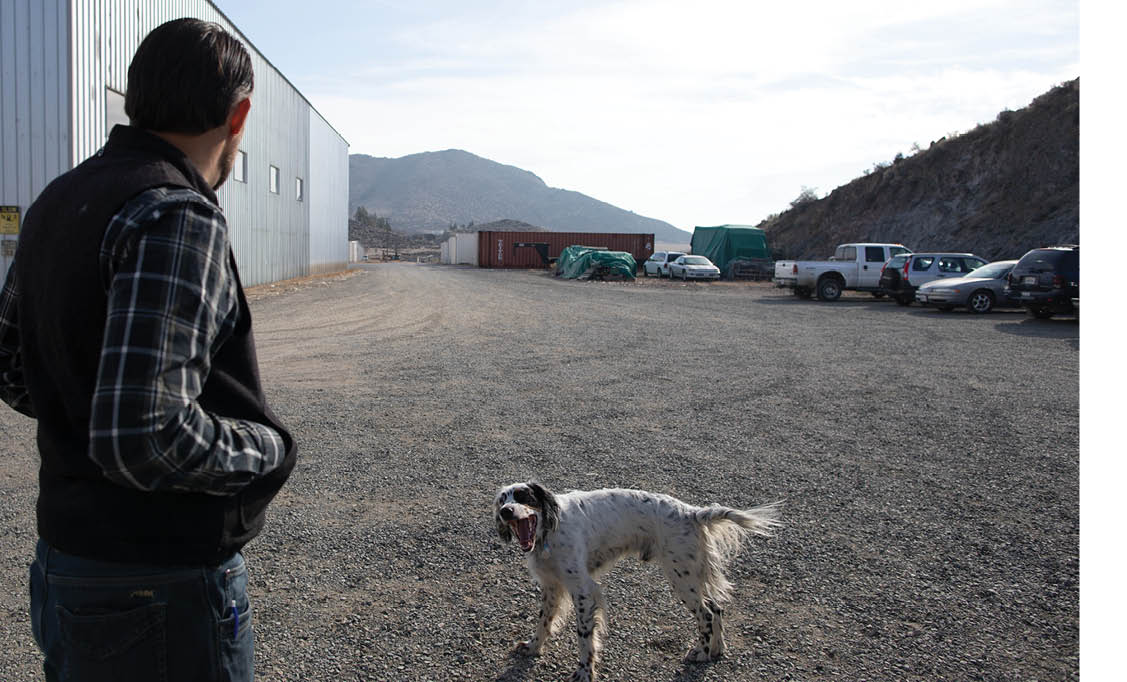
Firm founder Patrick Holland, who handed away in 2004 after his battle with most cancers, established the carding mill after buying 5 sheep canines, shifting to the Shasta Valley, and starting to lift sheep. He met the founding father of a pure bedding firm referred to as Shepherd’s Dream across the identical time that his sheep started to provide wool, prompting him to acquire a carding machine and begin the manufacturing course of.
After Holland’s loss of life, household buddy Nathon Thill—who had expertise with Shepherd’s Dream because the son-in-law of proprietor Eliana Jantz—bought Woolgatherer on the request of Holland’s widow. Thill operated the agency for the subsequent 15 years till Kearns, a buddy and colleague, took over as proprietor.
“A distinct segment enterprise like this begins from scratch, and there’s numerous curves alongside the best way,” Kearns says. “The enterprise began when Patrick realized that there was a necessity for pure fibers within the mattress and furnishings business. He began out pretty small, like numerous companies do, and determined that one of the simplest ways to distinguish was to convey a high-quality product with customized choices. The mill began with a love of animals that develop wool, and the land that they stay on, so we’ve tried to make that the inspiration of what we do.”
“When the corporate began, only a few carding mills have been changing wool into batting, though extra corporations are taking that method at present,” says Eric Smith, enterprise improvement supervisor, who has been with Woolgatherer for 20 years. He notes that wool features as a pure hearth retardant, whereas flame-retardant chemical compounds have been changing into extra strictly regulated in 1999 to protect towards off-gassing. “That was an enormous driver to start with,” he says. “That gave us a leg up. It helped us to get a foothold into the business.”
One other serendipitous second within the firm’s early years was the rising reputation of natural meals within the early 2000s, which helped to make customers extra conscious of the advantages of natural sourcing on the whole. “This helped us develop, as a result of we have been capable of department off of that [awareness] into the area that you just spend one-third of your life—the mattress,” Smith says.
Woolgatherer attained natural certification for its merchandise at a time when solely about 2% of the general marketplace for bedding merchandise lay throughout the natural and pure area. “We’ve since branched out into unique fiber blends—cashmere, silk, mohair, issues like that,” Smith says. “An excellent a part of our core base likes that we do a very home mix, primarily from central Oregon.”
Over time, Woolgatherer developed a robust fame for serving to prospects meet 16 CFR 1632 and 1633 requirements—about smoldering cigarettes and open flames, respectively—and not using a want for siliconized rayon or different chemical fire-retardant therapies. “We even have helped to pioneer the licensed natural program within the mattress world,” Kearns says. “I feel we have been one of many very first, if not the primary, mill to be licensed again within the early 2000s.”
“Individuals come to us for an additional degree of high quality, consolation, and advertising legitimacy. Issues like cashmere and alpaca and mohair and silk assist our merchandise stand out from the standard, run-of-the-mill mattress product.” — Hanks Kearns, Woolgatherer
Farm to manufacturing unit
Woolgatherer’s manufacturing course of begins with its growers, with whom the corporate works intently to make sure excessive requirements and humane, sustainable, and chemical-free flock administration. The corporate’s goal is to guard the setting whereas holding the standard degree excessive for its wool and cotton batting and textiles and 100% wool insulator obstacles. Private relationships with regional growers have developed in a mutually useful manner round tips which have progressed as wanted over time.
As soon as it’s able to be harvested, the wool fleece—a hardened protein—is sheared from the sheep. Subsequent, the wool is skirted to take away much less fascinating components of the fleece; graded, that means sorted by size, high quality, and generally shade; baled, that means compressed for storage and cargo; after which despatched to a scouring facility to be washed. Lastly, the wool is shipped again to the carding mill to be made right into a completed product. Woolgatherer works with each buyer to customise this product to their wants.
The corporate began with simply its premium EcoWool® mix, with a spread of micron and staple size that created a buoyant and resilient batting, then branched out into licensed natural and needle-punched materials, and eventually unique blends that blend primary wool with a share of alpaca, silk, and/or mohair for high-end beds.
Smith provides that Woolgatherer serves all sizes of firms, from large firms to “ma-and-pa retailers,” whereas distribution has expanded from principally West Coast accounts together with just a few on the East Coast to a completely nationwide presence within the U.S. and throughout Canada.
Lately, the corporate has been honing its concentrate on the extra unique fibers to assist differentiate its choices. “Individuals come to us for an additional degree of high quality, consolation, and advertising legitimacy,” Kearns says. “Issues like cashmere and alpaca and mohair and silk assist our merchandise stand out from the standard, run-of-the-mill mattress product.”
Whereas Woolgatherer has seen rising curiosity in unique fibers and specialty blended supplies, the corporate’s licensed natural choices stay in style. “There’s been a much-renewed concentrate on our EcoWool product line, which is grown and manufactured within the U.S., all in a comparatively small space right here in Northern California and Southern Oregon,” Kearns says.
A major change within the firm’s guide of enterprise within the 2020s has been an growth of private-label manufacturing for completed items. “We’re taking a few of these actual premium pure fiber supplies and batting and truly constructing them right into a ready-to-sell, extremely fascinating product that retailers and showrooms can design with us, have their label on the product, and create an instantaneous income stream,” Kearns says. “That’s been an enormous factor for us prior to now 5 – 6 years.”
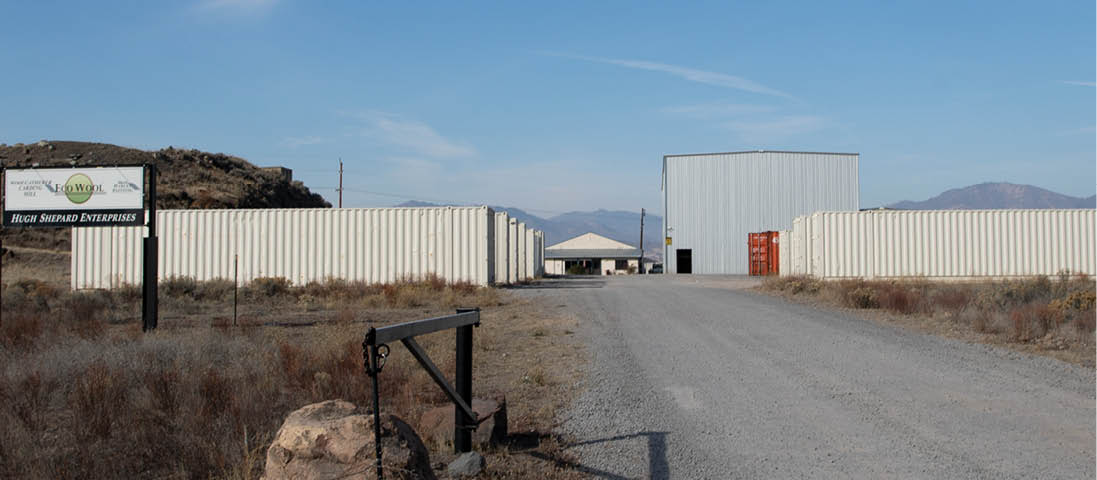
Constructing tradition and business ties
Over the quarter-century of its existence, Woolgatherer has tried to develop a tradition that’s as robust as its batting. The corporate has grown from 5 staff in its early days to its present roster of 17, lots of whom have stayed and labored their manner up by way of the ranks. “The possession, the individuals right here, we’re all household,” Smith says. “That’s why individuals stick round.”
“One factor that’s all the time endeared me to this firm is the expansion inside,” says Kerri Smith, chief working officer and 12-year veteran of the corporate (no relation to Eric Smith). “Eric began 20 years in the past, pushing a cart within the mill. I began in 2014, within the logistics division. We’ve each grown with the corporate into our present positions. I’m one of many individuals who indicators up new staff. I all the time say, ‘Be careful. When you begin right here, you’re by no means going to depart.’ The primary worker we ever had continues to be right here.”

She provides that the familial environment extends past the workday. “We take into account all people right here, the fellows within the mill, we take into account them our mates. We are going to exit of our manner to assist these guys. We’re actually shut as a gaggle.”
Woolgatherer additionally has stitched robust ties to the bedding business. “I actually respect the camaraderie that ISPA gives, and I’m very glad to see the rising assist and schooling they’re offering for environmentally sustainable applications, whether or not that’s the Mattress Recycling Council or the Sustainability Convention,” Kearns says. “I feel that is all superb work, getting in the precise path.”
“It’s nice to be concerned with ISPA and the broader mattress business,” provides Eric Smith.
“This connection permits us to successfully observe market developments and keep knowledgeable on the newest improvements.”
Constructed Sturdy
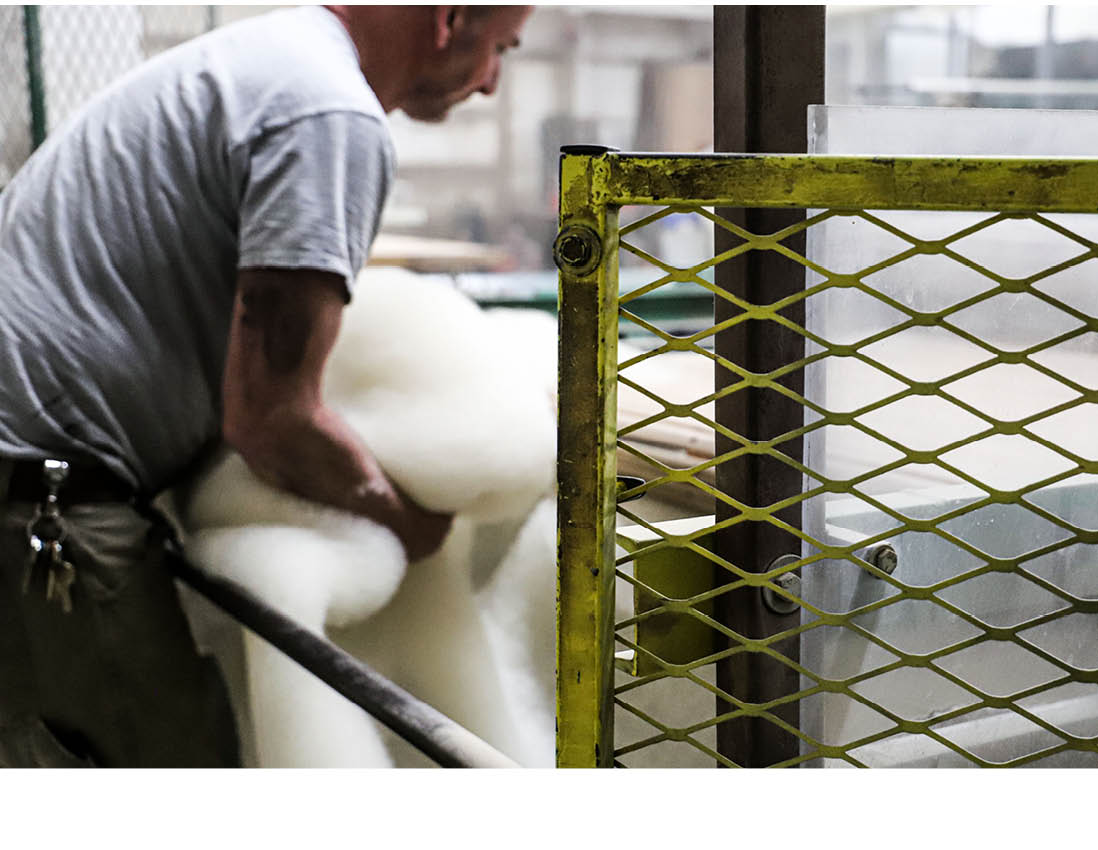
One among Woolgatherer’s major items of apparatus is about 80 years older than the corporate itself.
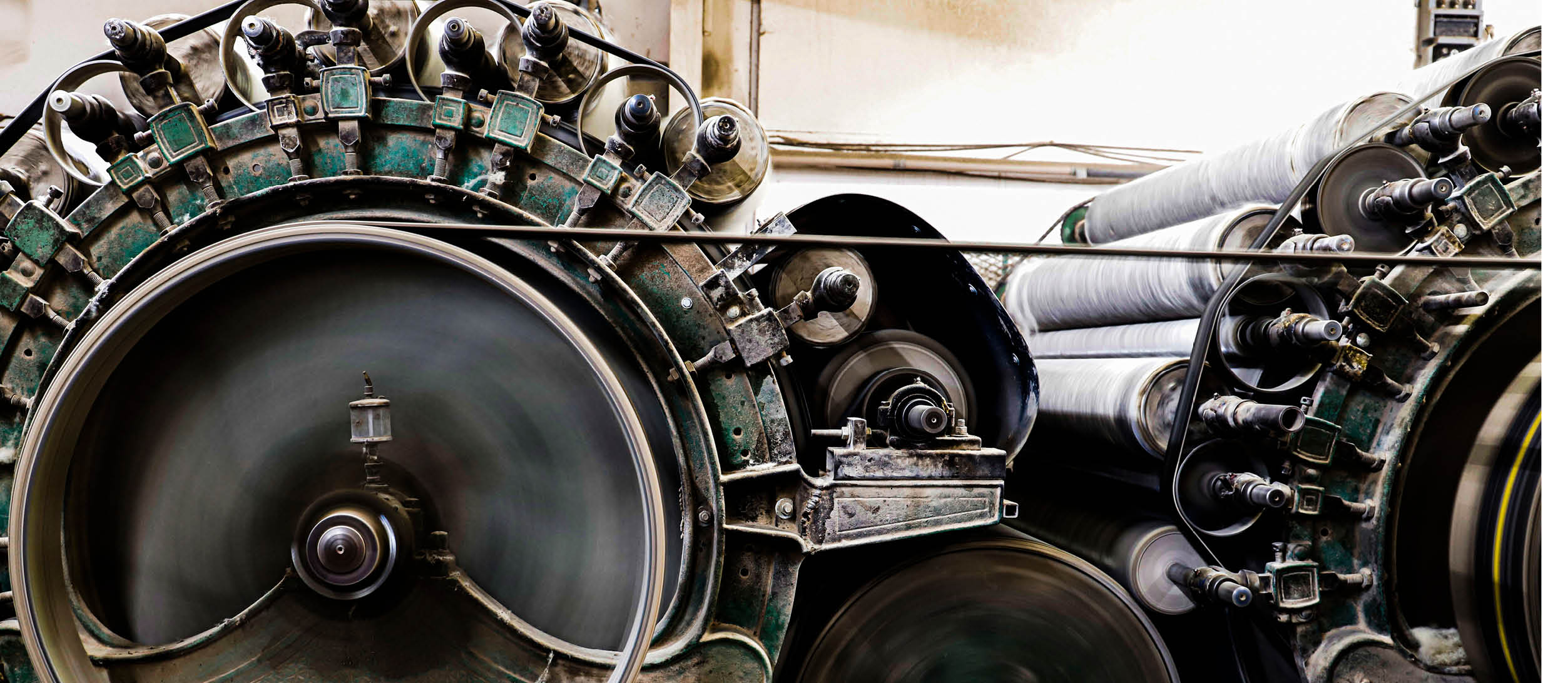
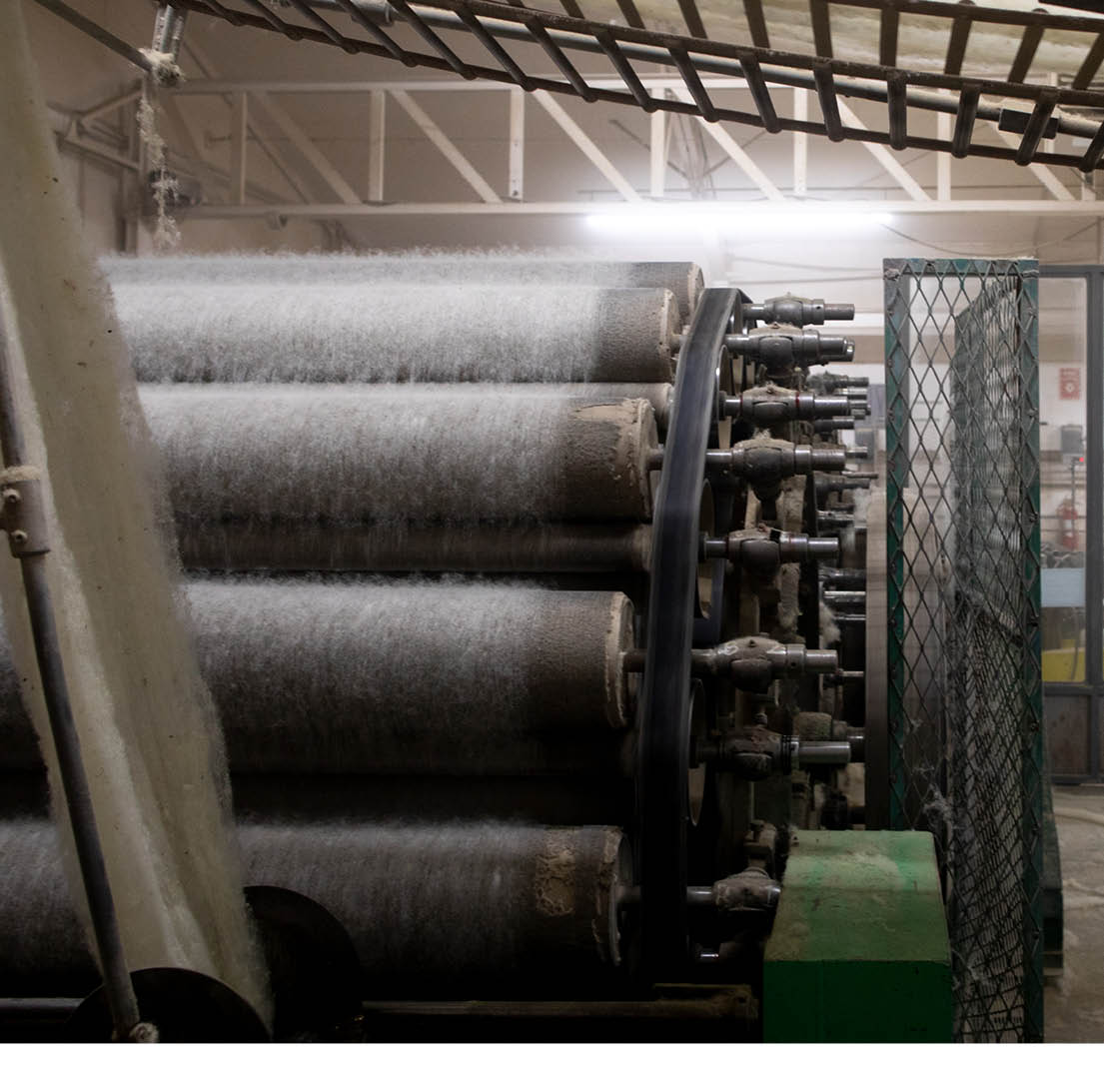
The classic carding machine proven right here—amongst different fashions utilized by the corporate—was inbuilt 1917. Initially designed to provide wool yarn, from which traces of vegetable matter have to be eliminated earlier than spinning can happen, the carding machine extracts particulates extra completely than most batting producers, based on the corporate, which has up to date and optimized the machine.