Why You Wake Up at 3 AM: Understanding the Center-of-the-Night time Wake-Up Sample
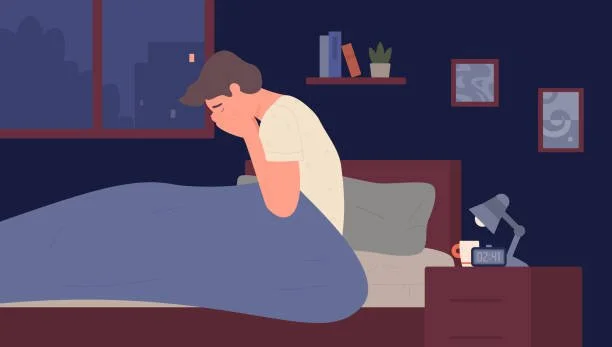
Many individuals expertise a wierd sample: they go to sleep usually, solely to all of a sudden get up round 2–4 AM—typically near the identical time each evening. This will really feel mysterious and even intentional, however it’s often a predictable interplay of circadian biology, sleep structure, stress hormones and environmental components. Understanding what occurs contained in the physique presently of evening could make these awakenings much less alarming and simpler to stop.

What Occurs within the Physique Round 3 AM
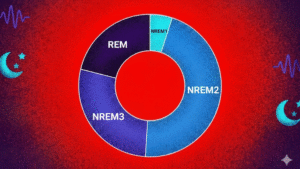
Human sleep follows a recurring 90–110 minute cycle that shifts throughout the evening. Within the first half of sleep, slow-wave sleep (deep sleep) dominates. Because the evening progresses, REM sleep durations change into longer and extra physiologically energetic (Carskadon & Dement, 2017). As a result of REM is lighter and extra fragile than deep sleep, the physique is of course extra vulnerable to waking up throughout the second half of the evening.
Round 3 AM, core physique temperature can also be close to its lowest level within the 24-hour cycle, a time when the circadian system is most weak to waking (Kräuchi & Deboer, 2010). On the identical time, stress-related hormones corresponding to cortisol start their early-morning rise to organize the physique for waking a number of hours later (Meerlo et al., 2002). Even small disruptions—mild, noise, a damaging dream, or inside worries—could cause the sleeper to floor.
Why You Usually Wake Up on the Identical Time
Repeated wake-ups at almost equivalent occasions can occur when the mind types a recurring affiliation. If somebody wakes up at 3 AM throughout a interval of stress, the mind could start anticipating that wake-up, which circumstances the arousal to happen once more (Perlis et al., 2011). That is just like how some folks get up one minute earlier than their alarm; the circadian clock learns the sample.
Persistent stress additionally makes middle-of-the-night awakenings extra persistent. Hyperarousal—each cognitive and physiological—is a significant driver of insomnia and fragmented sleep, and it tends to peak within the second half of the evening for these underneath stress (Bonnet & Arand, 2010). As soon as an individual turns into conscious of the sample, fear about waking up reinforces the cycle.
The Position of Stress, Nervousness and Rumination
At 3 AM, the mind is in a novel neurochemical state. REM sleep includes excessive emotional processing and vivid dreaming, and waking up throughout or instantly after REM can depart the thoughts energetic and unsettled. Decrease availability of rational, executive-function areas throughout this stage could make worries really feel extra intense and unresolved (Walker, 2017). Many individuals report racing ideas or nervousness spikes throughout these early-morning awakenings.

Environmental and Life-style Triggers
Even small components can affect middle-of-the-night wake-ups. Alcohol disrupts REM sleep and results in rebound awakenings as its sedative results put on off (Roehrs & Roth, 2001). Caffeine consumed even six hours earlier than bedtime could cause sleep fragmentation with out apparent consciousness (Drake et al., 2013). Temperature shifts, screens within the bed room, or shiny early-morning mild also can set off awakenings when sleep is of course lighter.
Is Waking Up at 3 AM Dangerous?
Temporary awakenings are regular. Most sleepers wake a number of occasions every evening however don’t bear in mind it. It turns into problematic solely when an individual stays awake for lengthy durations, experiences nervousness throughout the wake-up, or develops persistent sleep fragmentation that impacts daytime functioning.
Understanding the organic timing makes the phenomenon much less mysterious. The physique isn’t malfunctioning; it’s passing by means of its lightest, most weak sleep levels, throughout its lowest temperature level, whereas stress hormones start to rise.
How one can Scale back 3 AM Awakenings
Though many components contribute, bettering sleep consistency, managing stress earlier than bedtime, decreasing alcohol and caffeine, and optimizing the sleep atmosphere could make these awakenings much less frequent. Cognitive behavioral methods corresponding to stimulus management and pre-sleep winding-down routines assist decrease nighttime hyperarousal and break the “wake-up expectation” cycle (Edinger & Means, 2017).
References (APA 7)
Bonnet, M. H., & Arand, D. L. (2010). Hyperarousal and insomnia: state of the science. Sleep medication evaluations, 14(1), 9–15. https://doi.org/10.1016/j.smrv.2009.05.002
Carskadon, M.A. and Dement, W.C. (2017) Regular Human Sleep: An Overview. In: Kryger, M.H., Roth, T., Dement, W.C., Eds., Ideas and Observe of Sleep Drugs, sixth Version, Elsevier Saunders, Philadelphia, 15-24.
https://doi.org/10.1016/B978-0-323-24288-2.00002-7
Drake, C., Roehrs, T., Shambroom, J., & Roth, T. (2013). Caffeine results on sleep taken 0, 3, or 6 hours earlier than going to mattress. Journal of medical sleep medication : JCSM : official publication of the American Academy of Sleep Drugs, 9(11), 1195–1200. https://doi.org/10.5664/jcsm.3170
Edinger, J. D., & Means, M. Okay. (2005). Cognitive-behavioral remedy for major insomnia. Scientific psychology evaluate, 25(5), 539–558. https://doi.org/10.1016/j.cpr.2005.04.003
Krauchi, Okay., & Deboer, T. (2010). The interrelationship between sleep regulation and thermoregulation. Frontiers in bioscience (Landmark version), 15(2), 604–625. https://doi.org/10.2741/3636
Meerlo, P., Sgoifo, A., & Suchecki, D. (2008). Restricted and disrupted sleep: results on autonomic operate, neuroendocrine stress methods and stress responsivity. Sleep medication evaluations, 12(3), 197–210. https://doi.org/10.1016/j.smrv.2007.07.007
Perlis, M. L., Giles, D. E., Mendelson, W. B., Bootzin, R. R., & Wyatt, J. Okay. (1997). Psychophysiological insomnia: the behavioural mannequin and a neurocognitive perspective. Journal of sleep analysis, 6(3), 179–188. https://doi.org/10.1046/j.1365-2869.1997.00045.x
Roehrs, T., & Roth, T. (2001). Sleep, sleepiness, and alcohol use. Alcohol analysis & well being : the journal of the Nationwide Institute on Alcohol Abuse and Alcoholism, 25(2), 101–109.
Walker, M. (2017) Why We Sleep: Unlocking the Energy of Sleep and Desires. Scribner, New York.